On the morning of April 23, 2026 (the 7th day of the third lunar month in the Year of Bính Ngọ), marking the death anniversary of King An Dương Vương, the Thang Long – Hanoi Heritage Conservation Center and the Cổ Loa Historic Site Management Board solemnly held an incense-offering ceremony at Cổ Loa Historic Site in commemoration of the King. The ceremony attracted the participation of numerous delegates and local residents.
Attendees included representatives of the Board of Directors of the Thang Long – Hanoi Heritage Conservation Center, the Cổ Loa Historic Site Management Board, leaders of departments and divisions under the Center, the University of Social Sciences and Humanities, the Institute for Conservation of Monuments, leaders of the Party Committee and People's Committee of Đông Anh Commune, representatives of local agencies and organizations, as well as a large number of local residents and visitors from different regions.
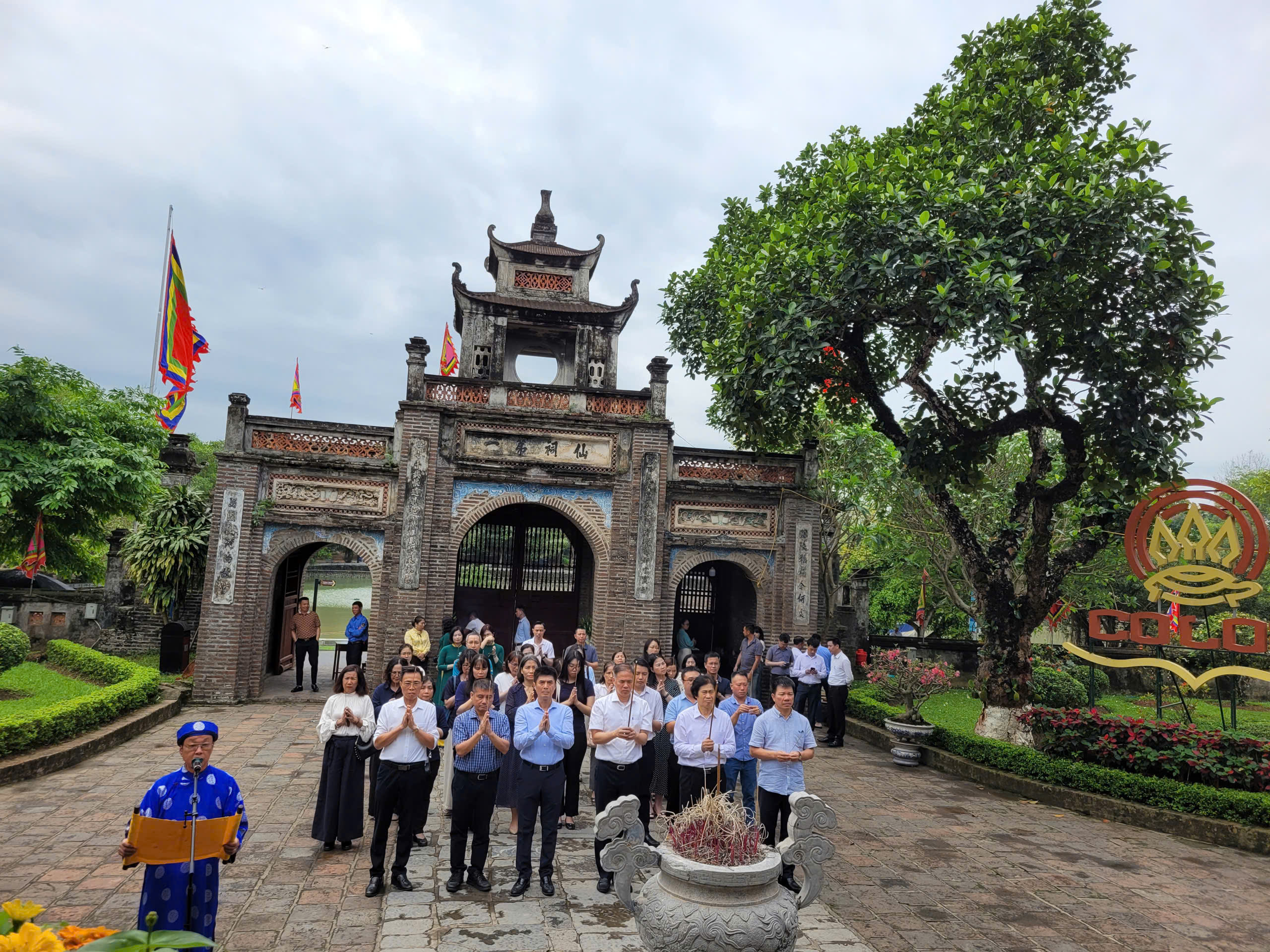 Delegates from agencies and organizations offer incense in commemoration of the King
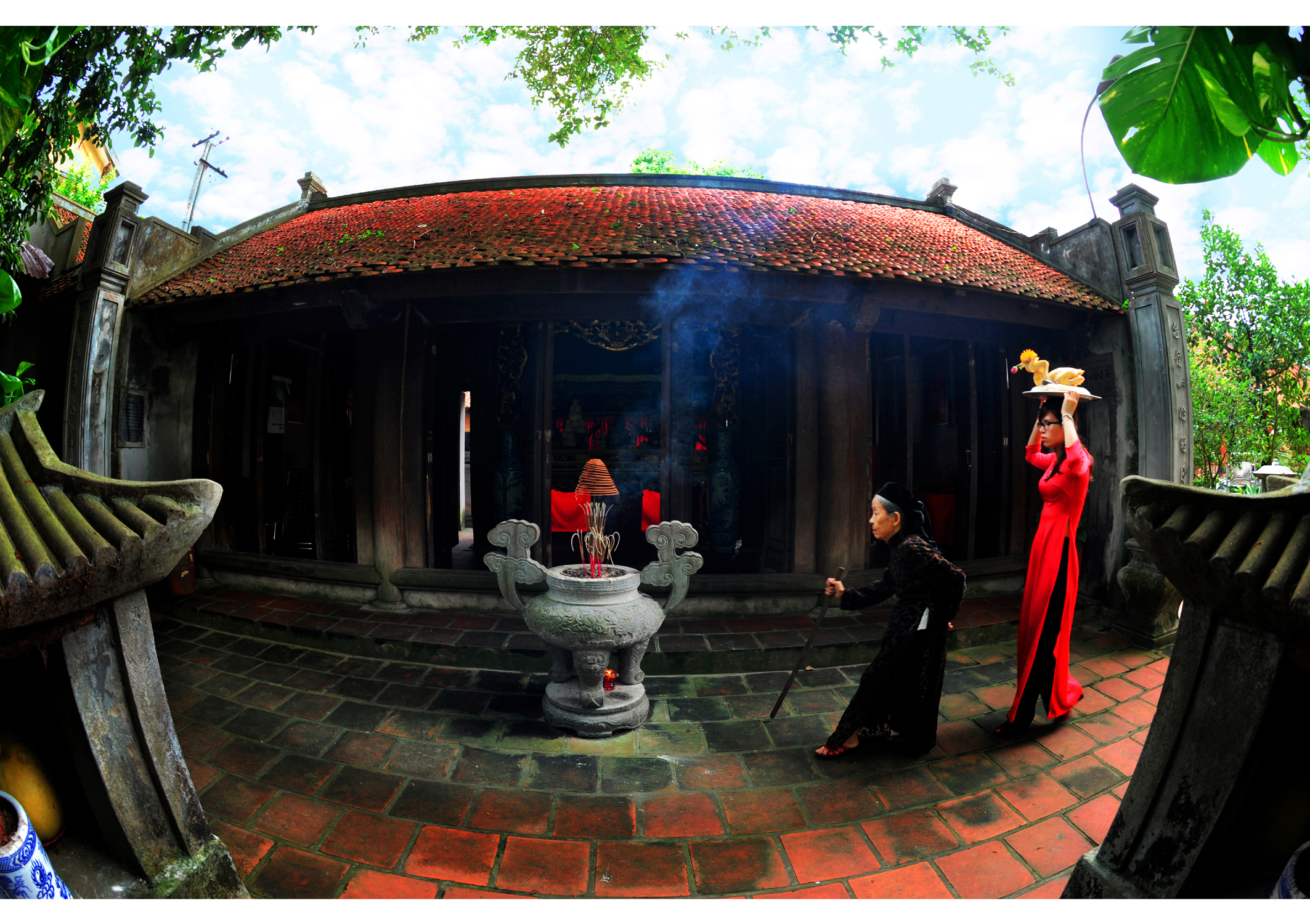
The ceremony took place in a solemn atmosphere, featuring traditional rituals such as incense offering and ceremonial offerings, expressing profound reverence and gratitude to the King for his great contributions to the early state-building efforts of the Vietnamese nation.
The King Who Founded the State of Âu Lạc
Thục Phán was originally a leader of the Tây Âu people in the northern region of Văn Lang at that time. Together with many Tây Âu and Lạc Việt chieftains, he organized the resistance against the Qin invasion. In 208 BC, the Qin dynasty was forced to withdraw its troops and retreat to defend the three commanderies it had occupied in the northern region.
During the resistance against the Qin army, Thục Phán emerged as a talented leader, earning great prestige among both the Tây Âu and Lạc Việt communities. In fact, the Lạc Việt and Tây Âu communities had already begun to form closer ties, which were further strengthened through their united struggle against foreign invaders. This provided the foundation for the emergence of a new alliance and an embryonic state, led by Thục Phán, a leader possessing outstanding abilities and great prestige.
In 208 BC, Thục Phán proclaimed himself King and established the state of Âu Lạc, continuing the legacy of the Hùng Kings. This was an event of particular significance in the development of Vietnamese national history.
One of King An Dương Vương's most strategically important decisions was to move the capital to the lowland region and choose Cổ Loa as the new capital. Here, a large-scale citadel with a distinctive spiral-shaped layout was constructed, combining natural terrain with military engineering techniques to create a formidable defensive system. Cổ Loa Citadel served not only as the political and economic center but also as an important military stronghold of Âu Lạc at that time.
During his reign, King An Dương Vương led the army and people of Âu Lạc in resisting invasions from the North and defending the country's independence. His legacy has been deeply preserved in history and folk memory through legends such as Gò Vua (King's Mound), the Magic Crossbow, and Loa Khẩu, as well as through the system of historical sites and traditional festivals at Cổ Loa today.
Preserving and Promoting Heritage Values
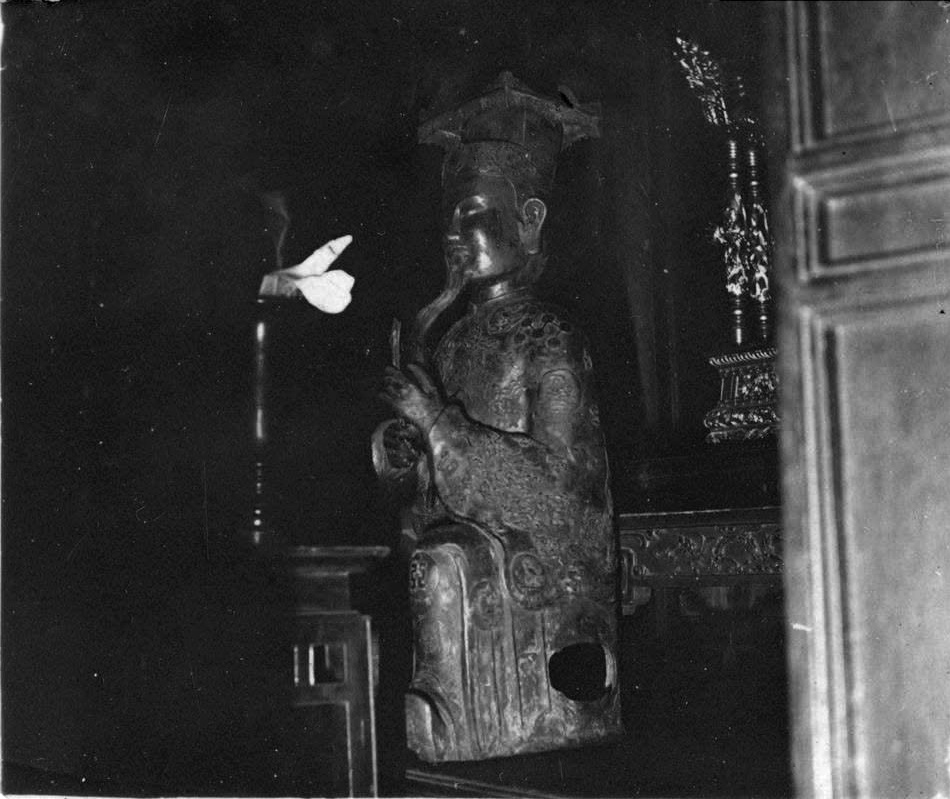
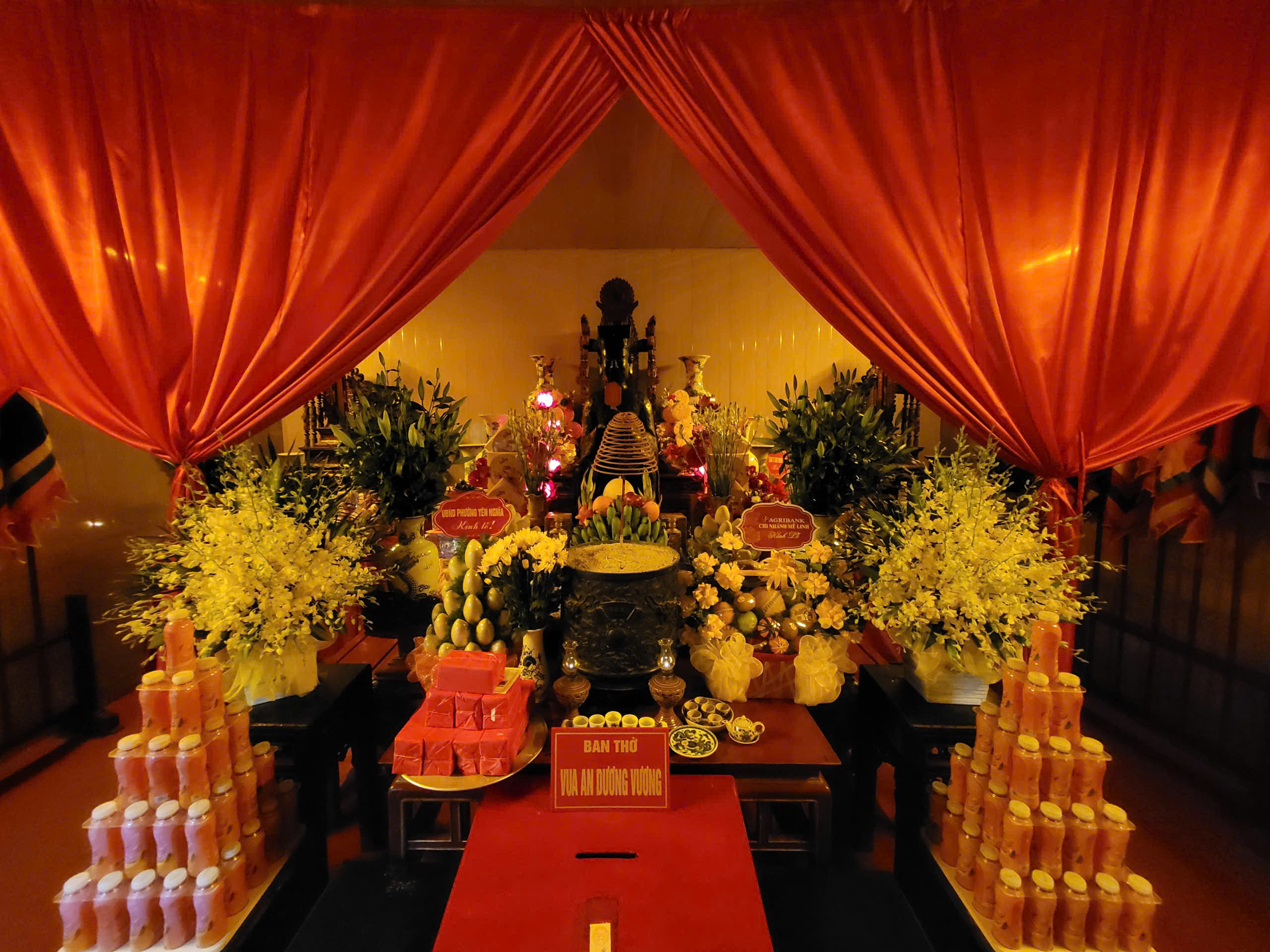
The altar dedicated to King An Dương Vương at the Upper Temple – Cổ Loa Historic Site
The incense-offering ceremony held on the death anniversary of King An Dương Vương represents the continuation of traditional cultural and religious values. It helps maintain the connection between the past and the present, educate younger generations about national history, foster patriotism, and raise awareness of the importance of preserving the nation's cultural heritage. Through these activities, the historical and cultural values of Cổ Loa Historic Site continue to be widely promoted, reaffirming the site's role and position in the cultural life of the capital.
CO LOA HISTORIC SITE MANAGEMENT BOARD