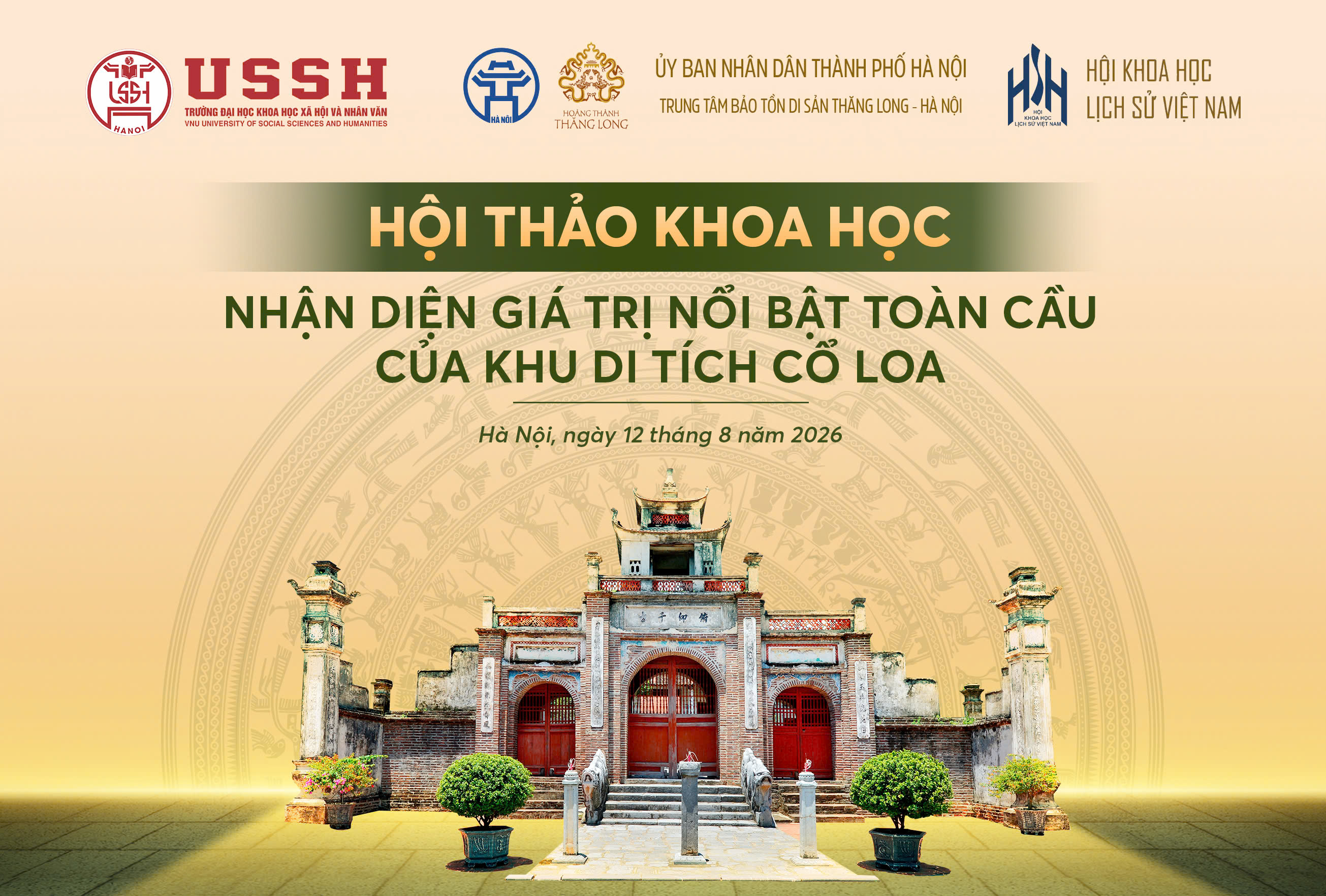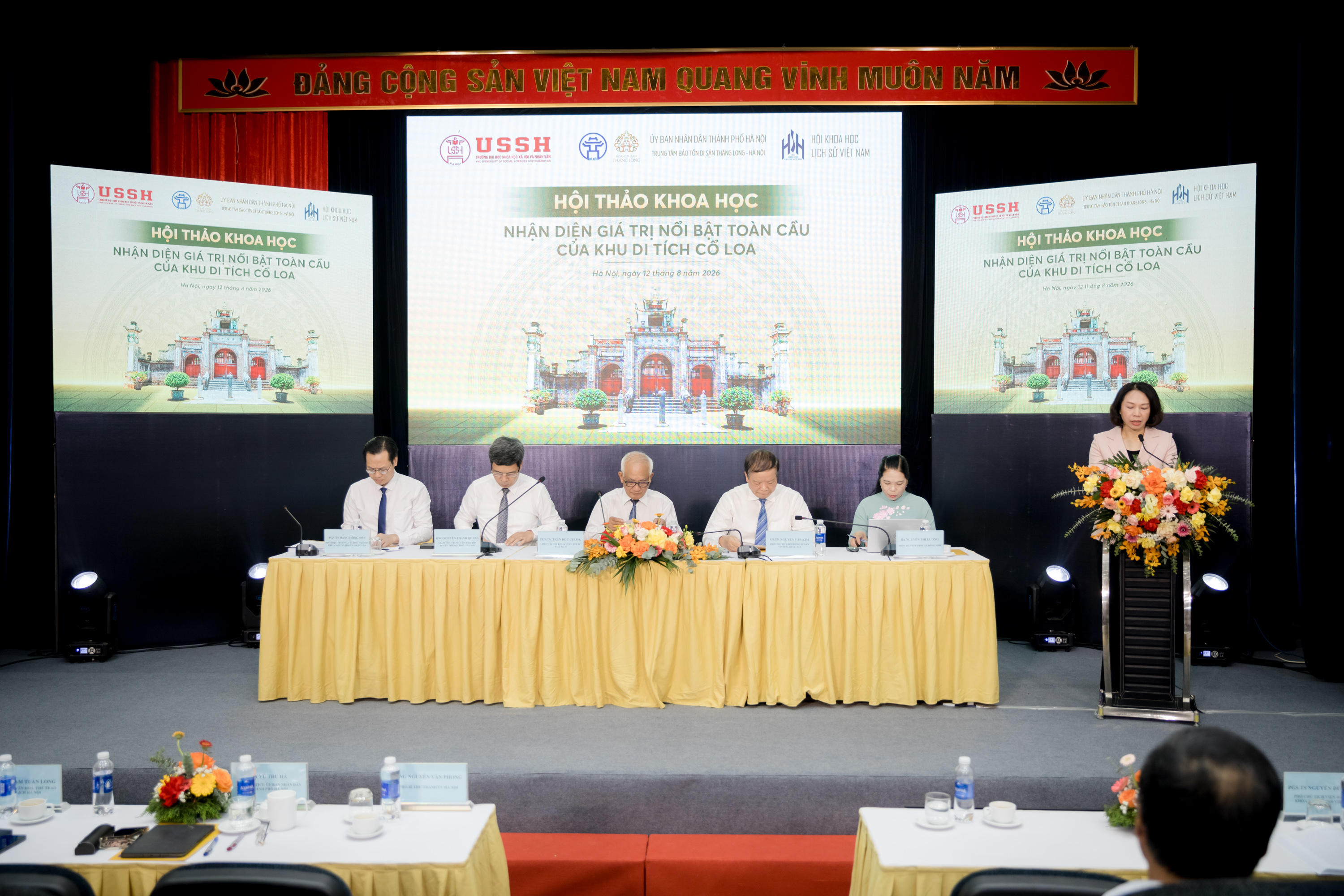
On August 12, 2026, at the Thăng Long Imperial Citadel Heritage Site, the Hanoi People's Committee and the Thang Long – Hanoi Heritage Conservation Center, in coordination with the Vietnam Association of Historical Sciences and the University of Social Sciences and Humanities, organized the scientific conference entitled “Identifying the Outstanding Universal Value of Cổ Loa Historic Site”.
The conference was attended by Comrade Nguyễn Văn Phong – Deputy Secretary of the Hanoi Party Committee; Comrade Vũ Thu Hà – Member of the Hanoi Party Committee and Vice Chairwoman of the Hanoi People's Committee; representatives of central government agencies, the UNESCO Office in Hanoi, the Vietnam Academy of Social Sciences, the National Cultural Heritage Council, and leaders of Hanoi's departments and agencies. Also in attendance were members of the Scientific Advisory Council for Cổ Loa Historic Site and Hanoi Citadel; leaders of research institutes, museums, heritage sites, and universities; representatives of the local authorities and community of Đông Anh Commune; and numerous experts, scholars, and representatives of central and municipal press agencies.
With the participation of managers, experts, and scholars from various fields, the conference served as an interdisciplinary academic forum for further research, discussion, and the development of a scientific foundation to support the completion of the Executive Summary of Cổ Loa Historic Site for submission to UNESCO for consideration for inclusion in the World Heritage Tentative List.
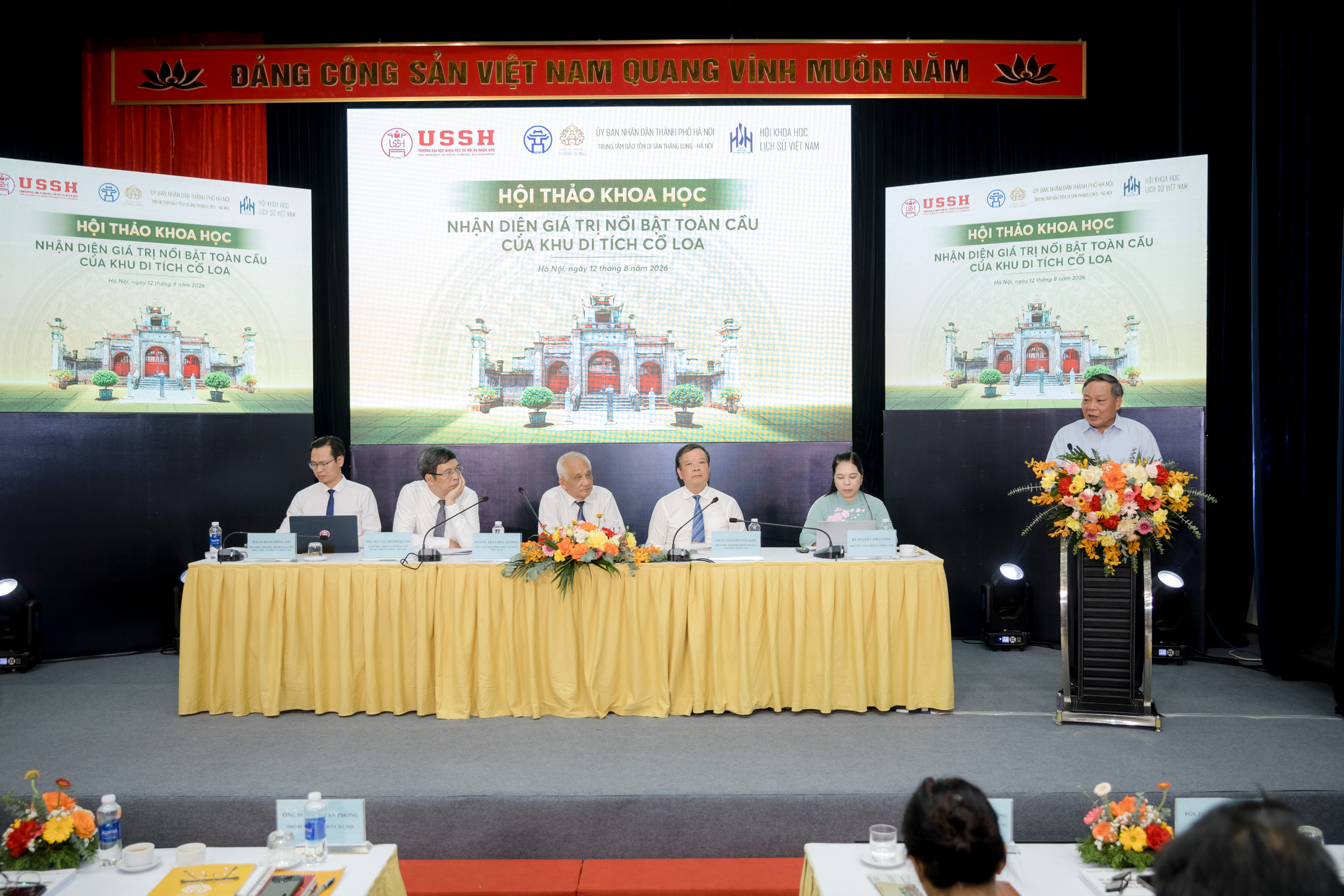 Comrade Nguyễn Văn Phong – Deputy Secretary of the Hanoi Party Committee, speaking at the conference
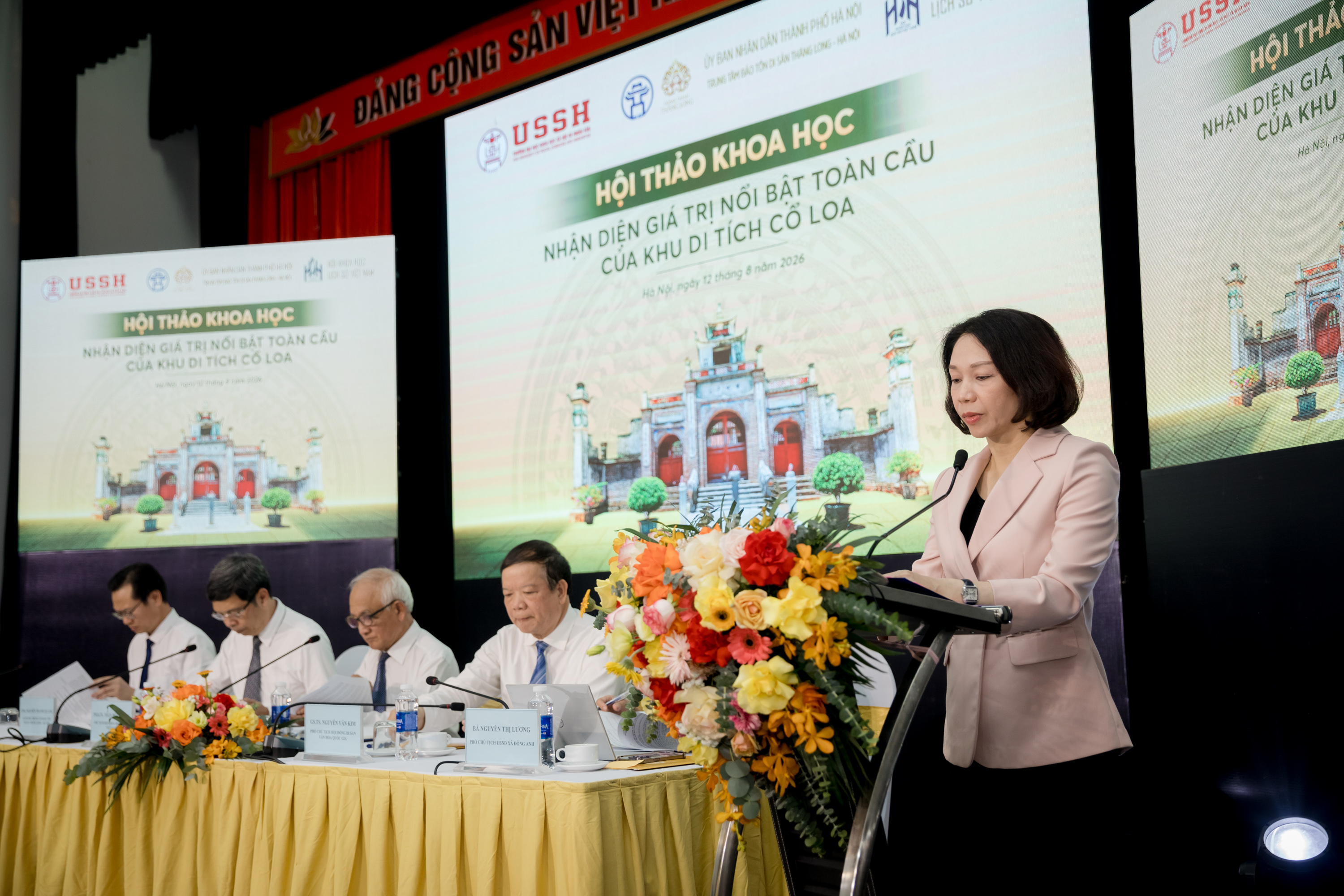 Comrade Vũ Thu Hà – Member of the Hanoi Party Committee and Vice Chairwoman of the Hanoi People's Committee, delivering the welcoming remarks
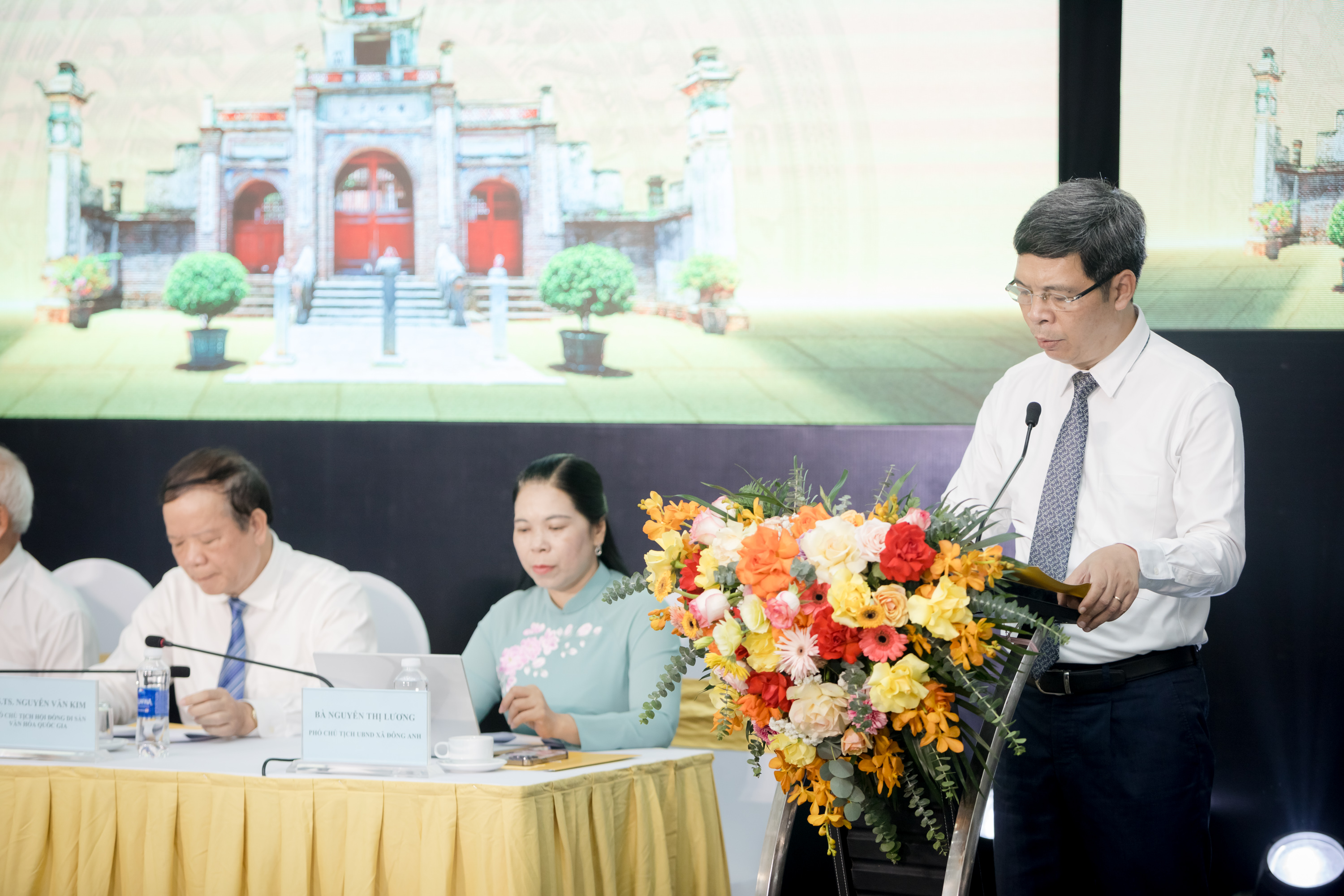 Comrade Nguyễn Thanh Quang – Director of the Thang Long – Hanoi Heritage Conservation Center, presenting the introductory report
The conference opened with a general report outlining the main contents of the draft Executive Summary of Cổ Loa Historic Site. The report initially proposed scientific arguments concerning the site's Outstanding Universal Value while identifying issues requiring further research, discussion, and refinement during the preparation of the nomination dossier.
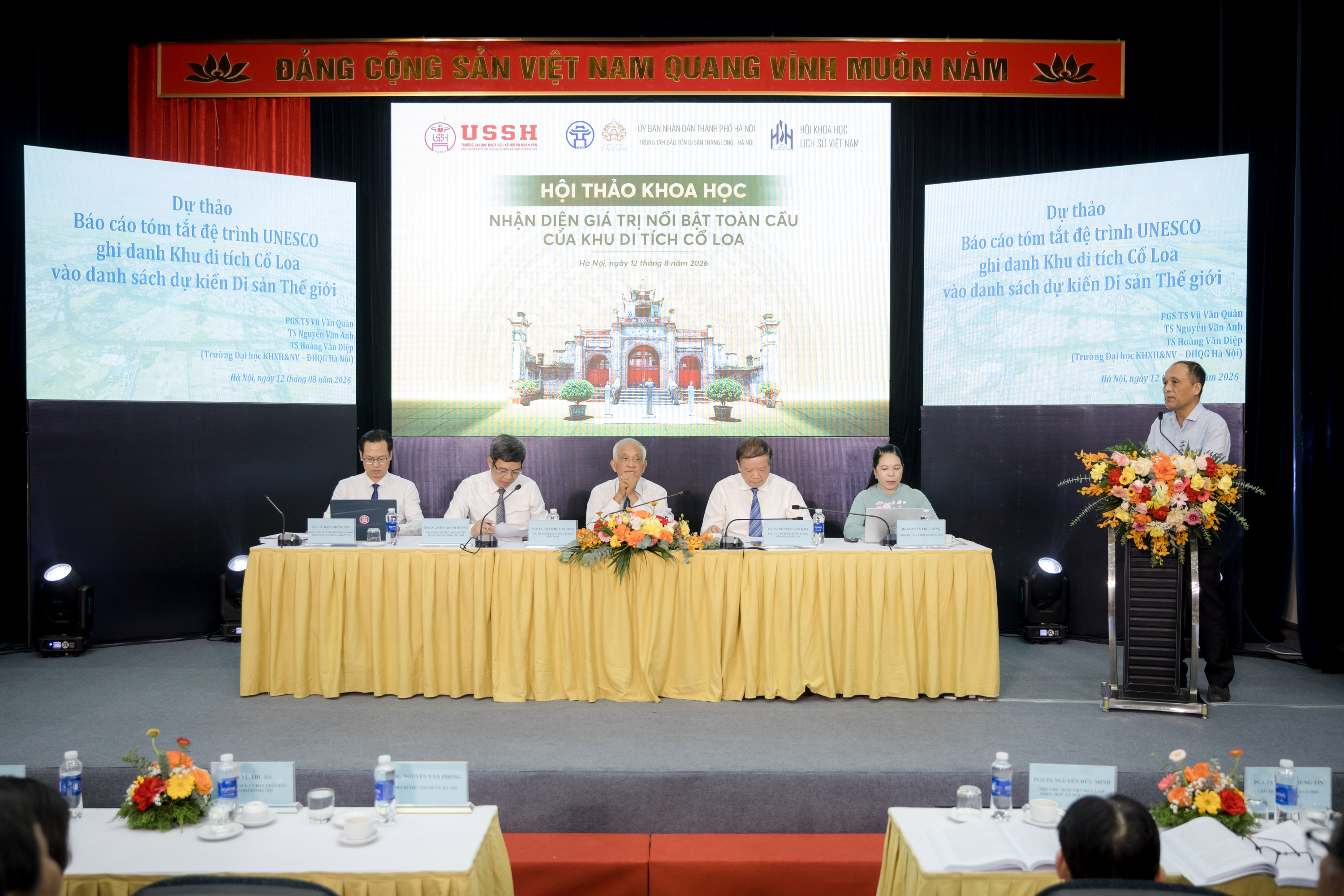 Assoc. Prof. Dr. Vũ Văn Quân – Chairman of the Scientific and Training Council of the Faculty of History and Culture, University of Social Sciences and Humanities, presenting the general report
The first session, entitled “Cổ Loa – A Center of Convergence and Dissemination of Red River Civilization”, approached Cổ Loa from multiple perspectives, including archaeology, history, geography, geomorphology, hydrology, fortifications, urban planning, military studies, and culture. These studies helped clarify the formation and development of Cổ Loa from the Metal Age, particularly the Đông Sơn period; its role in the establishment of the state of Âu Lạc and the development of Red River civilization; and the relationship between people and the natural environment in selecting the location, organizing settlement spaces, and constructing the defensive system.
Experts and scholars presenting papers at the first session of the conference
Discussions in the first session also emphasized that Cổ Loa should be understood not merely through its system of ramparts and archaeological sites, but as a historical, cultural, archaeological, and landscape space that has been continuously formed, developed, and passed down over more than two millennia. Traditional customs, religious beliefs, festivals, legends, and community life, together with the system of tangible heritage sites, create a continuous connection between the past and the present, contributing to the formation of Cổ Loa's distinctive cultural landscape.
The second session, entitled “Cổ Loa Historic Site – Outstanding Universal Values”, examined the research findings from the first session within the framework of the 1972 World Heritage Convention and UNESCO's requirements for establishing Outstanding Universal Value. Through presentations and academic discussions, delegates focused on assessing Cổ Loa in its regional and global context while gradually building consensus on the core arguments relating to the site's heritage values.
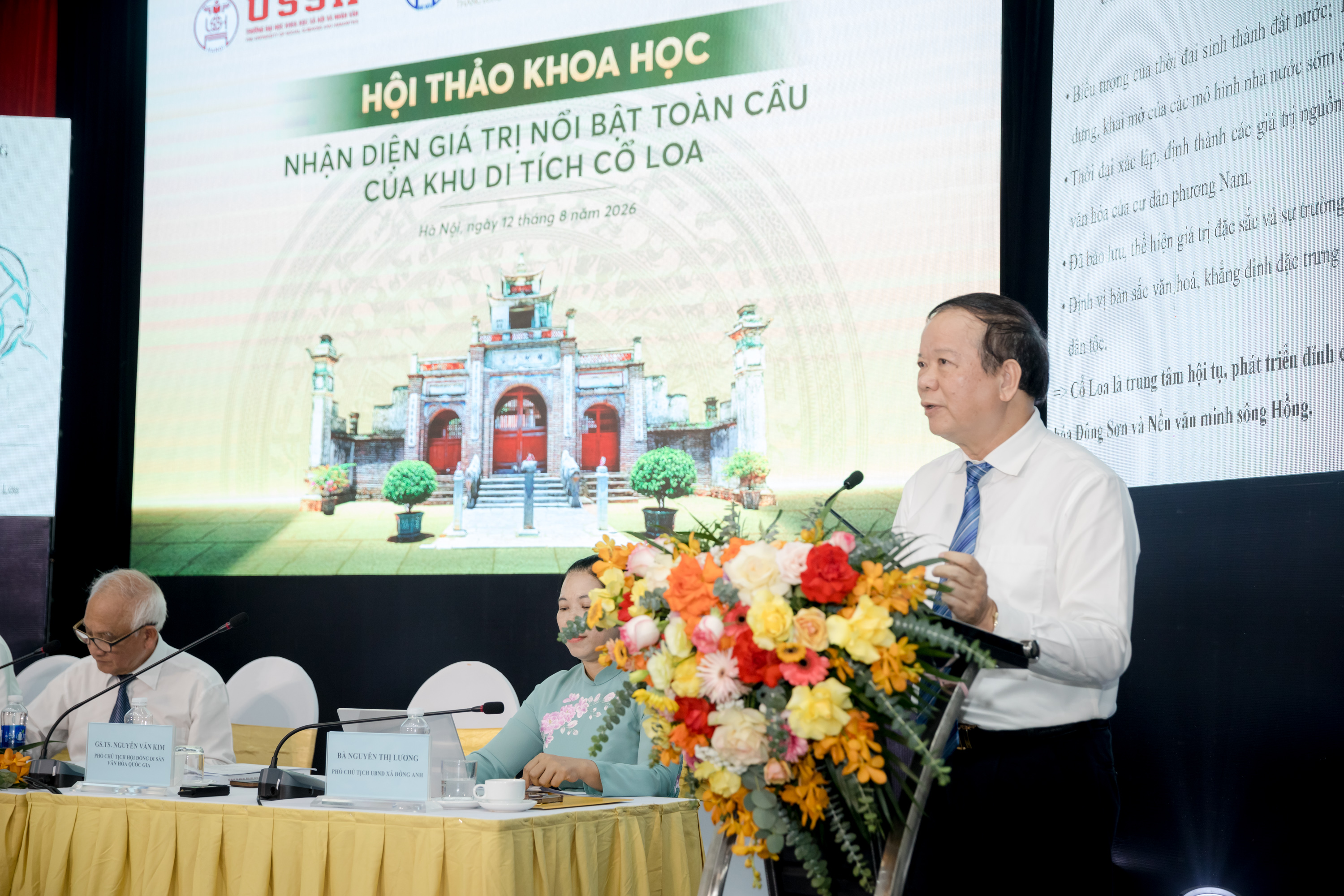
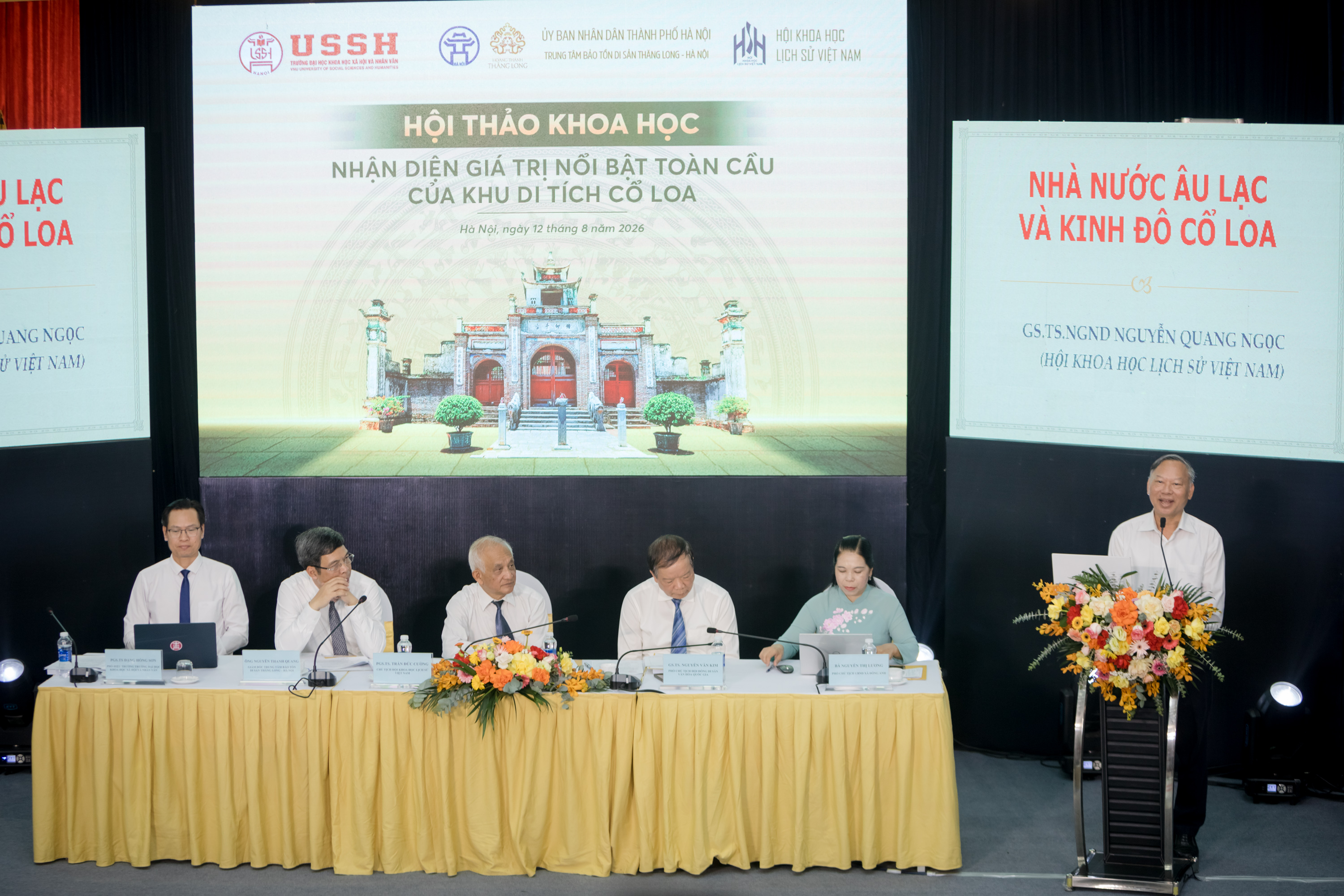
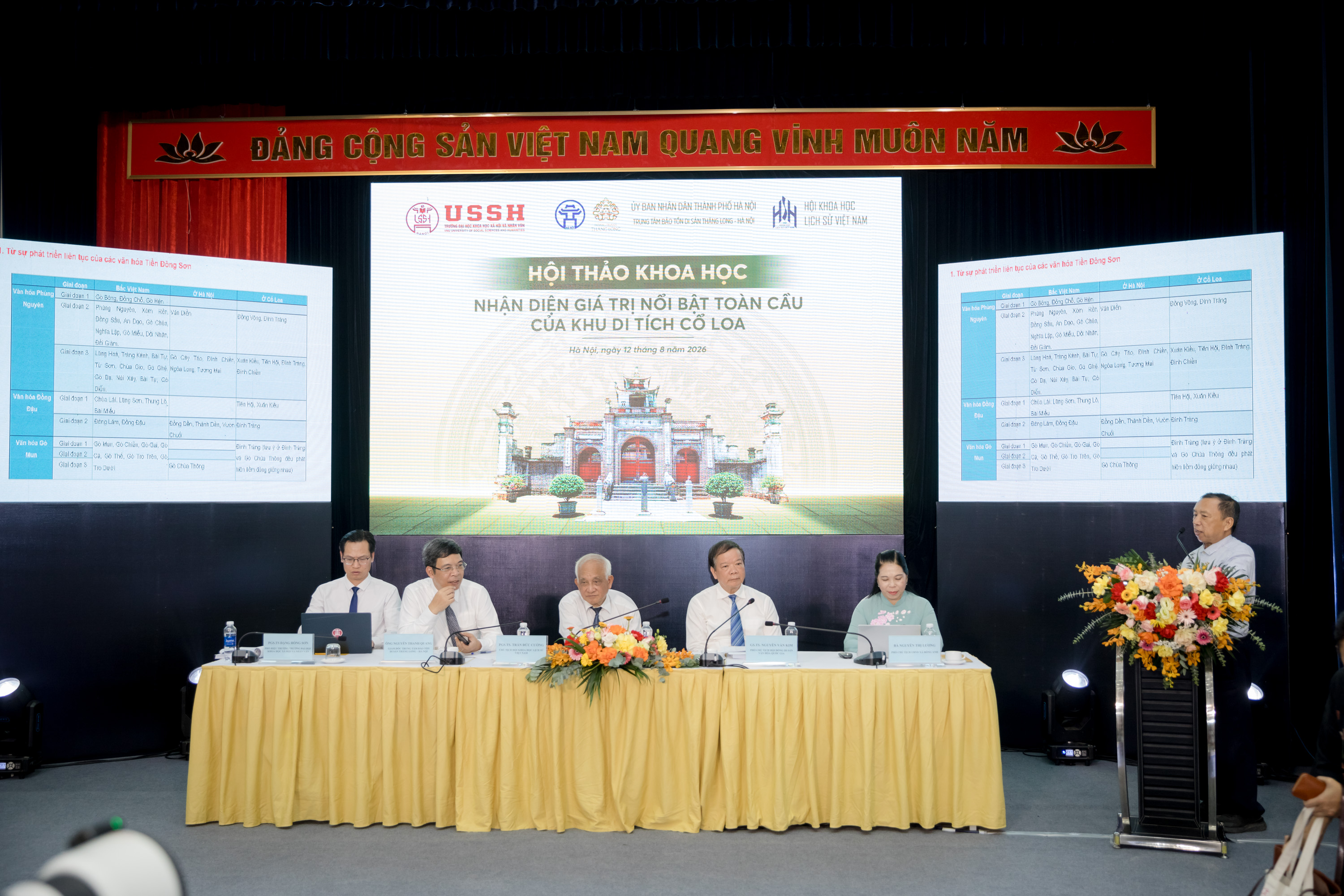 Experts and scholars presenting papers at the second session of the conference
One of the key topics discussed was Cổ Loa's position in the transition from Metal Age agricultural communities to the emergence of an organized state model capable of mobilizing resources, planning spatial development, and managing society on a large scale. In addition, the Cổ Loa rampart system was recognized as a construction of exceptional scale, harmoniously integrated with the natural terrain and river network. It reflects the technical capabilities, planning vision, and creative adaptability of ancient inhabitants within the political, cultural, and environmental context of the Red River Delta.
Based on the presentations and discussions, the conference reached an initial consensus on the direction for developing arguments concerning the Outstanding Universal Value of Cổ Loa Historic Site under criteria (iii) and (iv) of the World Heritage Convention. Criterion (iii) is approached through exceptional evidence of Red River civilization and the state of Âu Lạc, associated with an important period in the formation of early states in Southeast Asia. Criterion (iv) is considered through the large-scale system of ramparts and the integration of planning, natural terrain, and waterways, reflecting a distinctive model of capital city, defense, and territorial management.
The conference also identified issues requiring further research and supplementation, including deepening international comparative studies; strengthening arguments concerning authenticity and integrity; enhancing interdisciplinary evidence; and continuing research into mechanisms for managing, conserving, and promoting heritage values in accordance with UNESCO requirements.
Assoc. Prof. Dr. Trần Đức Cường – President of the Vietnam Association of Historical Sciences, delivering the concluding remarks
In concluding the conference, the Chair of the Conference Presidium affirmed that the event had contributed to establishing an interdisciplinary academic foundation and gradually building scientific consensus on the outstanding values of Cổ Loa Historic Site. Delegates broadly agreed on the main issues concerning the proposed name of the heritage site, criteria (iii) and (iv), authenticity, integrity, and initial comparisons between Cổ Loa and heritage sites with similar characteristics and values. These outcomes provide an important basis for further completing the Executive Summary and preparing the nomination dossier for the inscription of Cổ Loa Historic Site on UNESCO's World Heritage List.
In the coming period, the preparation of the nomination dossier will continue through comprehensive, interdisciplinary, and archaeological research; the organization of specialized national and international scientific conferences; expanded international cooperation; further comparative studies with similar heritage sites in the region and around the world; and the strengthening of scientific arguments concerning the selection criteria, authenticity, integrity, and Outstanding Universal Value. At the same time, heritage management, conservation, and promotion will continue to be linked with the role of local communities and the requirements of sustainable development.
The conference marked an important step in the ongoing research, identification, and refinement of the scientific foundation for the values of Cổ Loa Historic Site, towards preparing a scientifically robust World Heritage nomination dossier while laying the groundwork for the future conservation and promotion of the site's heritage values.
CO LOA HISTORIC SITE MANAGEMENT BOARD