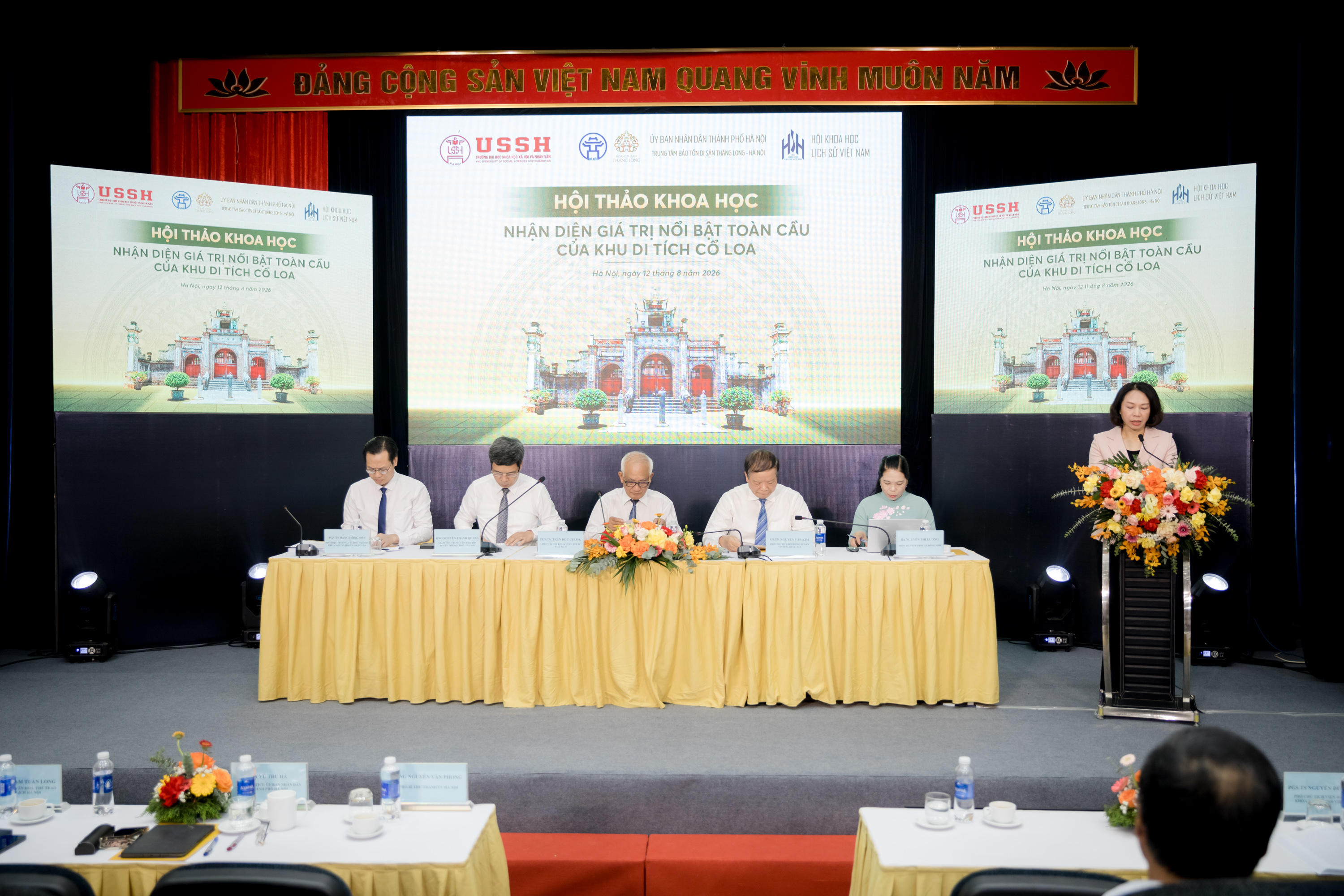
On the morning of March 4, 2026 (the 16th day of the first lunar month in the Year of the Horse), the Thư Cưu Village Festival officially opened in a solemn and joyful atmosphere, attracting large numbers of local residents and visitors from near and far.
Thư Cưu is located to the northeast of Cổ Loa Citadel and is one of the eight ancient villages that worship King An Dương Vương, commonly known as “Bát xã hộ nhi” (the Eight Dependent Communes). According to folk traditions and surviving historical records, during the Âu Lạc period, Thư Cưu played an important role in the capital's defense system. It is believed to have served as a military garrison and training ground, as well as the place where General Cao Lỗ, the talented military commander associated with the legend of creating the magic crossbow to defend the nation, organized military preparations and developed battle strategies. Its geographical location and rich historical heritage have helped shape the local people's patriotic traditions, martial spirit and deep sense of pride.
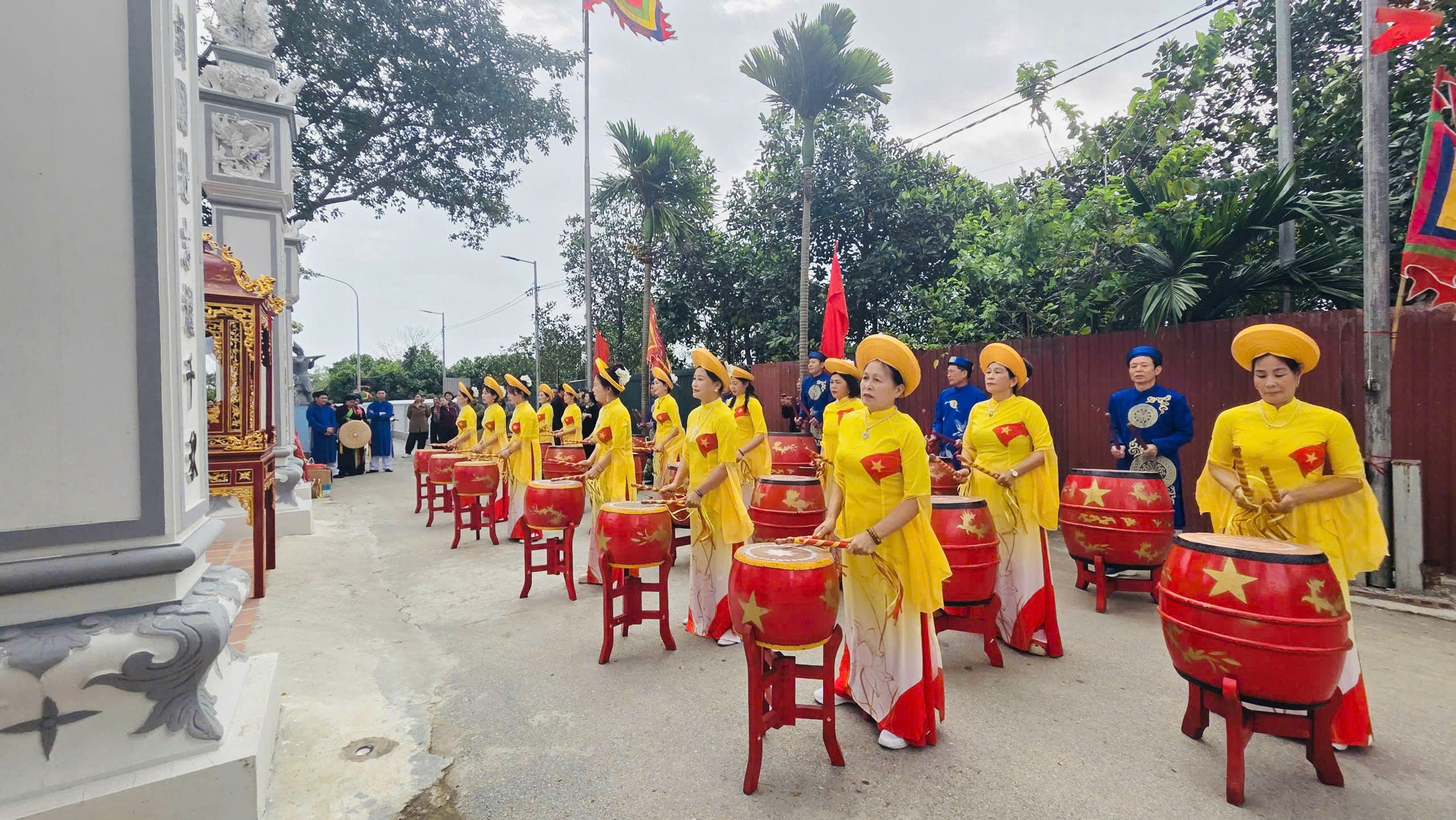
Traditional festival drum performance
According to the stele inscription “Hậu Thần Bi Ký” (Record of the Stele Honoring the Village Guardian Deity), erected in the year Kỷ Hợi, the 15th year of the Vĩnh Thịnh reign (1719), Thư Cưu was an independent commune at that time. However, through historical upheavals, particularly the impact of peasant uprisings in the 18th century, its residents dispersed, and the village gradually diminished in size before being incorporated into Lương Quán Commune. In the early 19th century, Thư Cưu Hamlet belonged to Lương Quán Commune, Cổ Loa Canton, Đông Anh District, Kinh Bắc Region. After 1954, Thư Cưu became part of Thượng Hamlet, Cổ Loa Commune. Despite administrative boundary changes over different periods, the cultural heritage and spiritual tradition of worshipping King An Dương Vương have been steadfastly preserved by the community, becoming a bond connecting generations of residents.
The name Thư Cưu itself has inspired several interesting interpretations. One explanation suggests that the area was once the king's library, hence the name “Thư Cưu”. Another opinion holds that it was formerly a granary belonging to the Âu Lạc royal court, supplying provisions for the army during wartime. Regardless of the interpretation, the village's name evokes its special role in the organizational structure of the ancient capital – a place associated with the preservation of knowledge or the provision of logistical support for the nation.
One of the festival's distinctive features is the procession of “Bỏng Chủ” offerings presented to the King on the afternoon of the 15th day of the first lunar month. According to legend, since the Âu Lạc period, Cổ Loa and Thư Cưu had been two villages specializing in making bỏng – a lightweight, compact and easily transportable dried food used by soldiers during military campaigns, similar to the field rations of later resistance wars. Every year, villagers prepared “Bỏng tiến Vua” (Bỏng offered to the King); over time, this specialty became an indispensable offering at the Cổ Loa Festival on the 6th day of the first lunar month. The palanquin procession and offering ceremony not only express reverence for previous generations but also vividly recreate an aspect of the military and civilian life of the Âu Lạc State, reminding people of the tradition of solidarity in the cause of national defense.
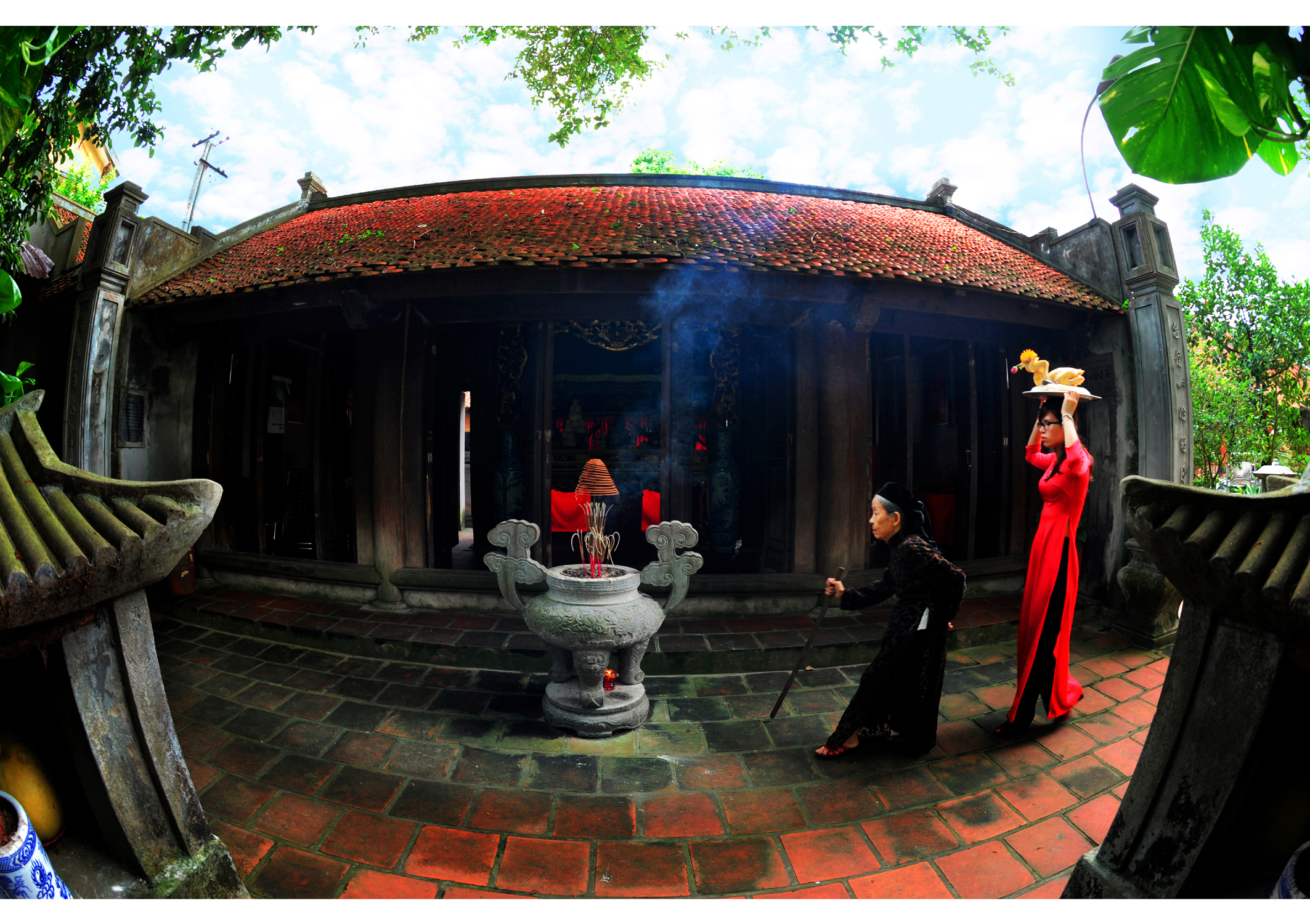
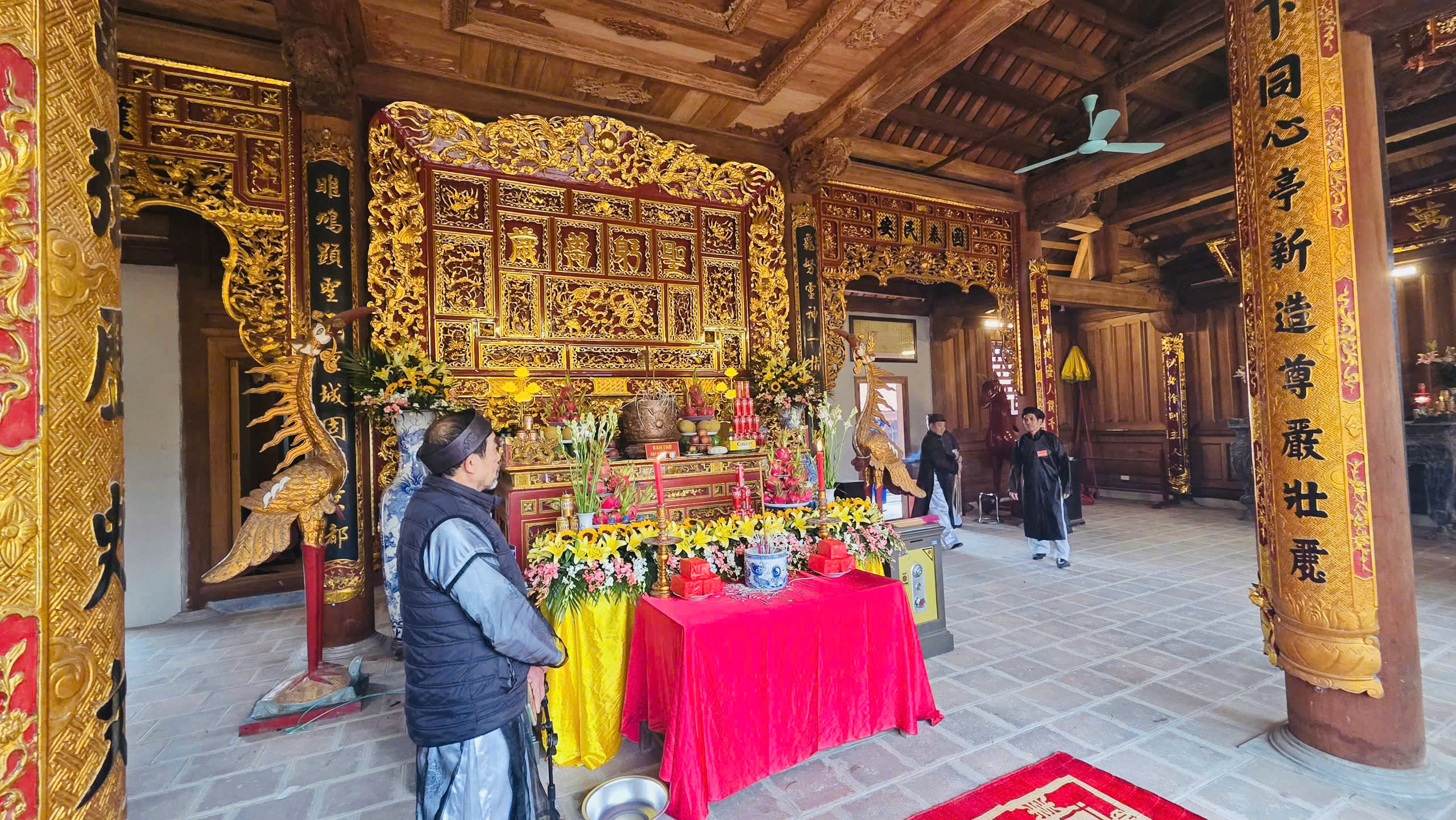 A sacred space during the village festival
The area in front of the temple takes on a solemn and reverent atmosphere during the festival, adorned with colorful festival flags and filled with the fragrance of incense. Alongside the solemn ceremonial rites, the festival also features a variety of lively cultural and sporting activities, including volleyball, traditional wrestling, pot smashing and Quan họ folk singing. Among these, volleyball and wrestling attract large numbers of participants, creating an energetic and enthusiastic atmosphere that reflects the martial spirit and community solidarity. The melodious Quan họ folk songs echoing through the ancient village further enrich the festival with the distinctive cultural identity of the Northern Vietnamese Delta.
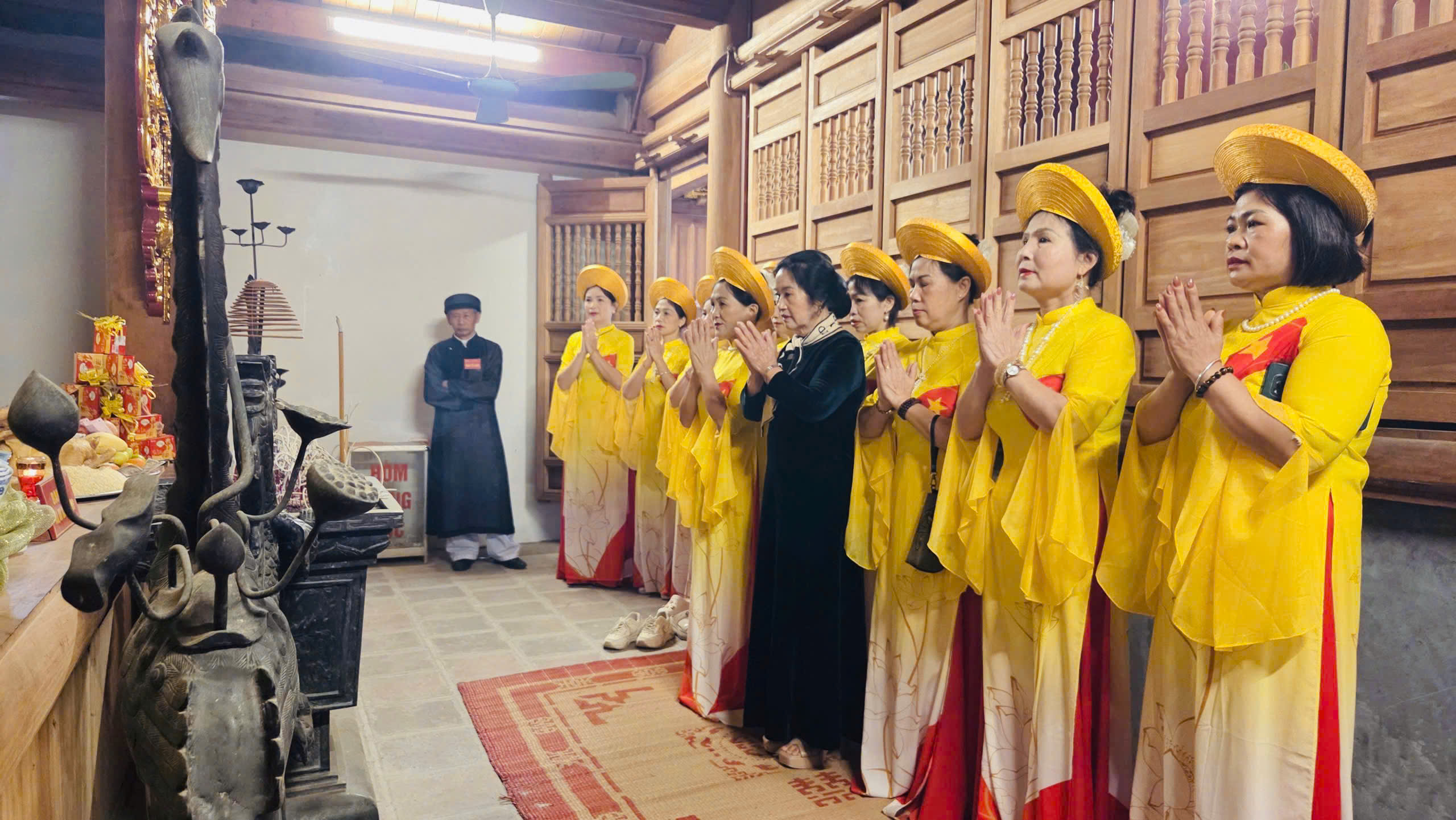
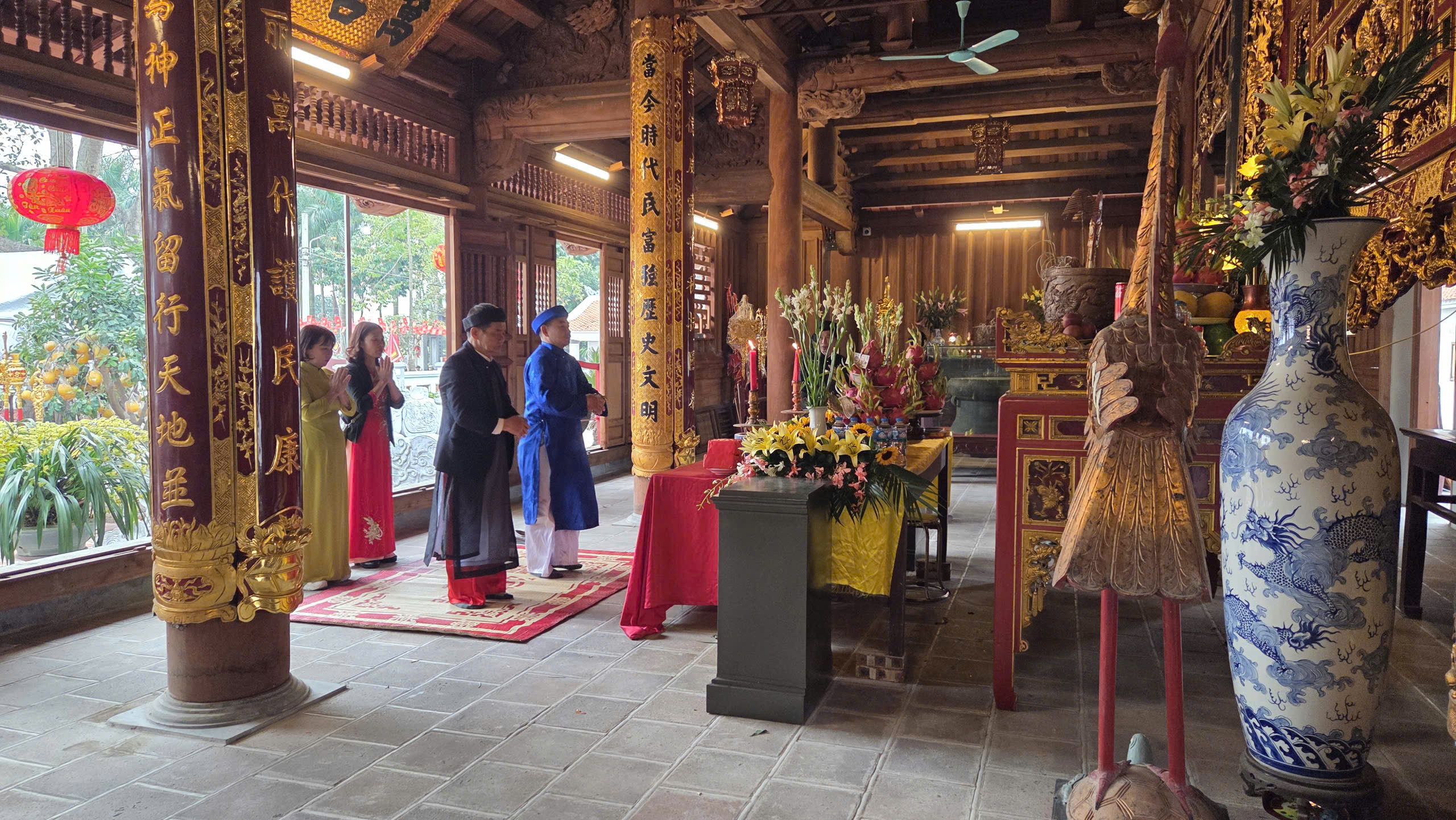 Local residents respectfully presenting ceremonial offerings
In particular, Thư Cưu Village was once famous for its traditional kite-flying festival. According to accounts passed down by village elders, each kite was approximately as long as the width of three bays of the communal house and was meticulously crafted. When the kites soared high into the sky, the sounds of their flutes resonated like a chorus across the spring sky, creating enchanting melodies that captivated listeners. This was once a distinctive cultural activity that attracted large numbers of local residents and visitors. However, amid historical changes and transformations in social life, the kite-flying festival gradually faded away. Researching, restoring and promoting the value of this folk activity has now emerged as a legitimate aspiration to further enrich community cultural life.
Today's Thư Cưu Village Festival is not only an occasion to express gratitude to King An Dương Vương and previous generations but also a vivid symbol of cultural vitality in the modern era. The festival is increasingly organized with greater solemnity, vibrancy and splendor, harmoniously combining tradition with contemporary life, sacred rituals with a civilized and modern community cultural space. In an era of transformation and development for the capital and the nation, the Thư Cưu Festival not only preserves a thousand-year-old legacy but also nurtures aspirations for sustainable cultural development – where heritage is safeguarded through responsibility, shared through creativity and carried forward with pride. Each festival season brings the community closer together and strengthens its confidence in the future, inspiring collective efforts to build an increasingly prosperous and beautiful homeland, worthy of the heroic traditions of the sacred land of Cổ Loa.
CO LOA HISTORIC SITE MANAGEMENT BOARD