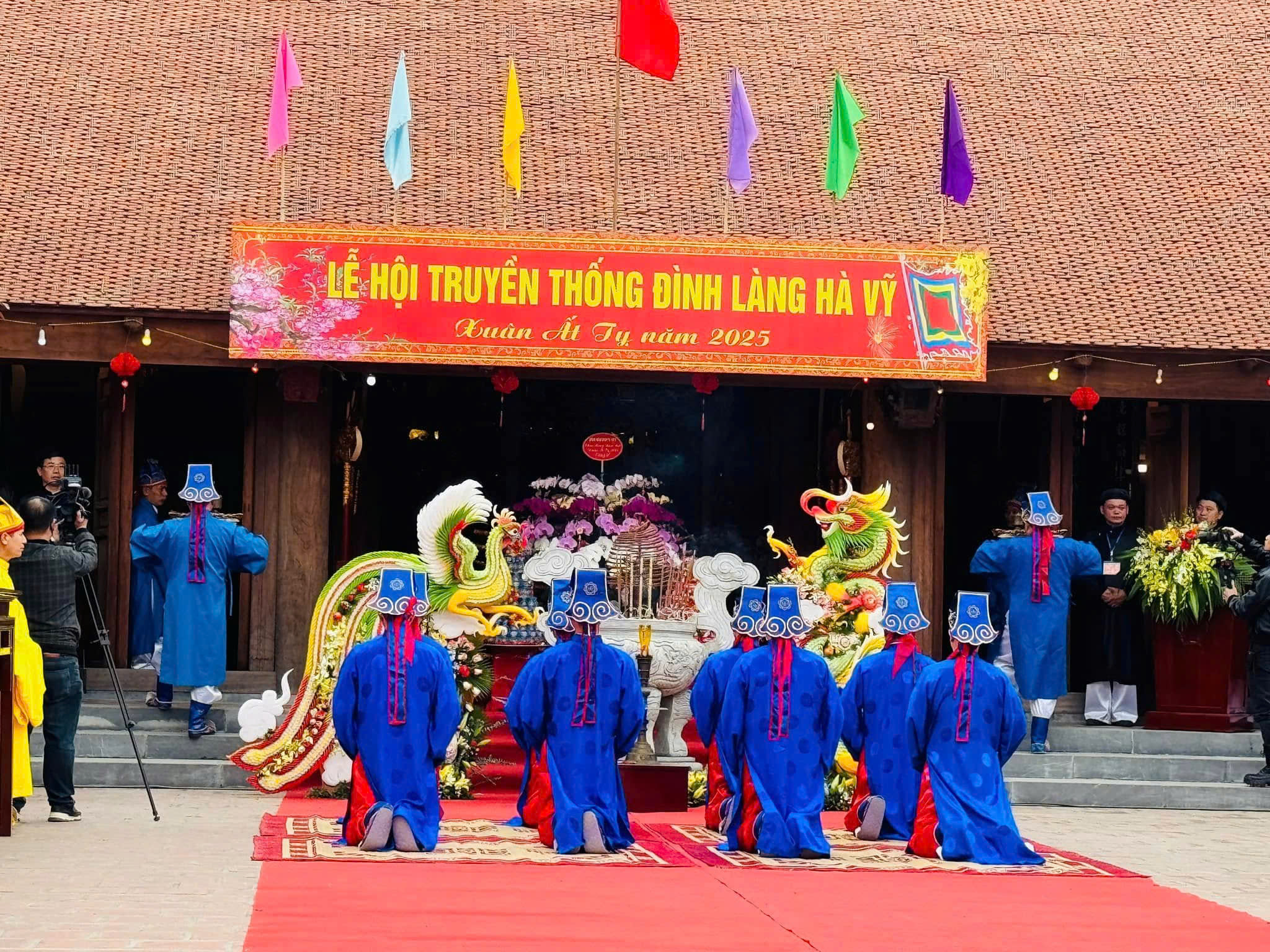
Every year, as spring arrives, Quậy Village holds its traditional festival from the 12th to the 14th day of the First Lunar Month at Hà Vĩ Communal House, Liên Hà Commune, Đông Anh District, Hanoi. This is a festival rich in folk cultural identity, featuring diverse activities characteristic of the Northern Delta.
Hà Vĩ Village was established more than 200 years before the Common Era by residents migrating from Cổ Loa Village (locally known as Chạ Chủ) together with the original inhabitants of the Nguyên Hương neighborhood. Hà Vĩ Communal House, located between Đại Vĩ and Giao Tác hamlets, is also called Quậy Communal House by local people. The communal house worships five generals who made significant contributions to protecting the nation and its people: Thủy Hải, Đăng Giang, Khổng Chúng, Tam Giang, and Đông Hải Đoàn, representing three different historical periods.
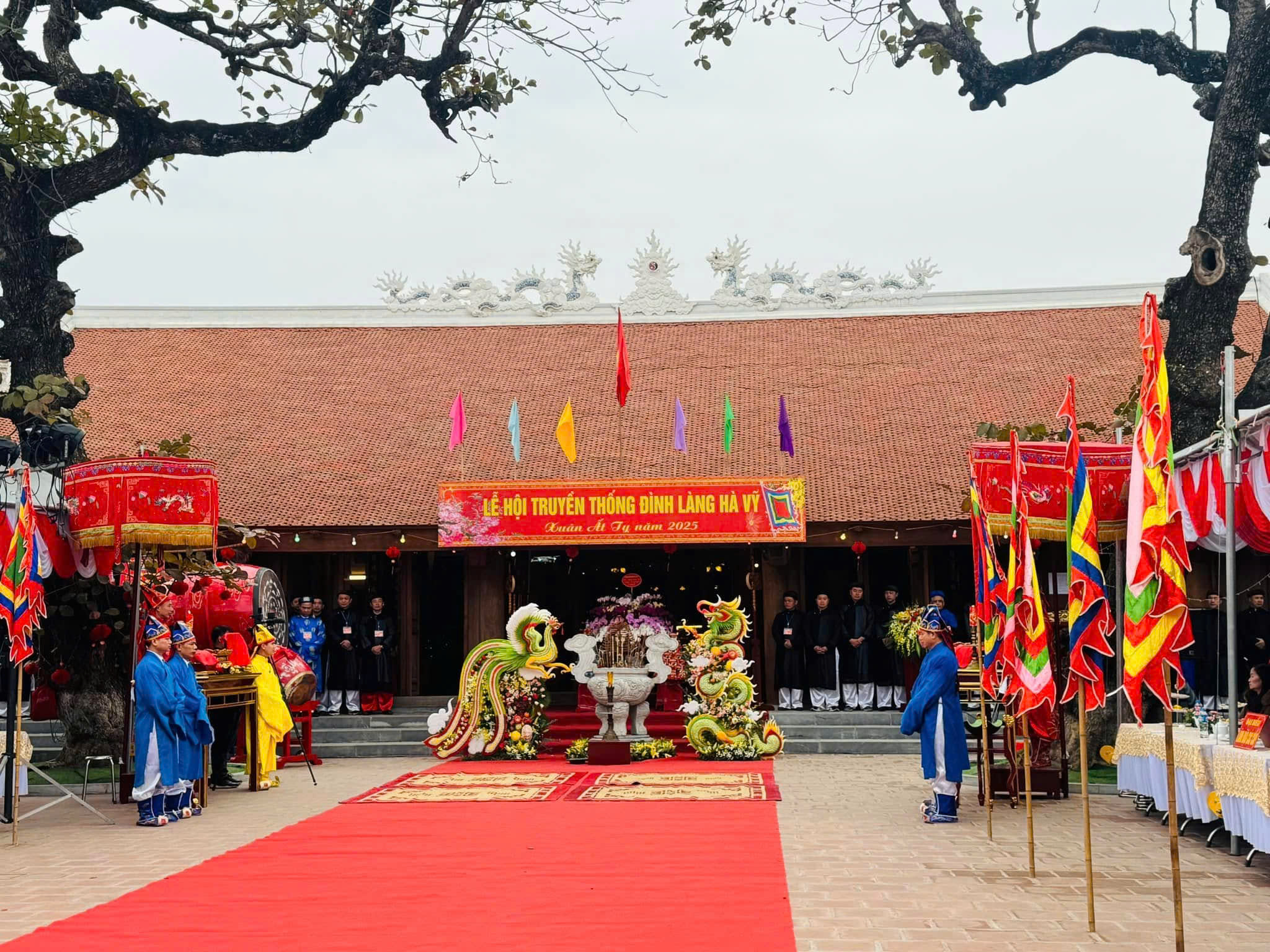 Ritual reading of the ceremonial text
According to legend, the people of present-day Quậy Village are descendants of the original inhabitants of Cổ Loa. It is said that after receiving the throne from the 18th Hùng King, An Dương Vương moved the capital from the Bạch Hạc – Việt Trì region down to the lowlands and ordered the people of Chạ Chủ to resettle in the Hà Vĩ area to establish a new village. This was the village located at the “tail of the river” (“Hà” meaning river, “Vĩ” meaning tail). The village name “Quậy” is believed to be a phonetic transformation of “cuối,” referring to the low-lying area at the end of the river. Because the people of Quậy are descended from Cổ Loa, they were honored as the “eldest brother.” Every year, during the Cổ Loa Festival on the 6th day of the First Lunar Month, the villagers were invited to return to offer prayers to the King and were given the place of honor during the ceremony. When Cổ Loa established Sa Market, Quậy villagers were exempt from taxes. Later, as people from other villages began falsely claiming to be from Quậy to enjoy this privilege, the village elders formally requested Cổ Loa to abolish the practice.
Following the solemn and sacred rituals, the Quậy Village Festival continues with vibrant folk games such as tug-of-war, wrestling, blindfolded duck catching, sack jumping, and pot breaking. These activities not only create a joyful and energetic atmosphere but also strengthen community bonds and leave cherished memories for villagers.
Lion and dragon dance performances are also highlights of the festival, bringing a lively and festive atmosphere with the symbolic meaning of warding off evil spirits and bringing good luck and prosperity to the community in the new year.
Like many other traditional festivals, the Quậy Festival is also an occasion to enjoy local delicacies such as bánh chưng and chè lam. These foods are not only delicious but also embody the culinary traditions of the Northern Delta. The Quậy Festival in Liên Hà Commune is not only a distinctive cultural event but also an opportunity for residents to express unity and preserve the traditional values of their homeland.
Ritual of burning the ceremonial text
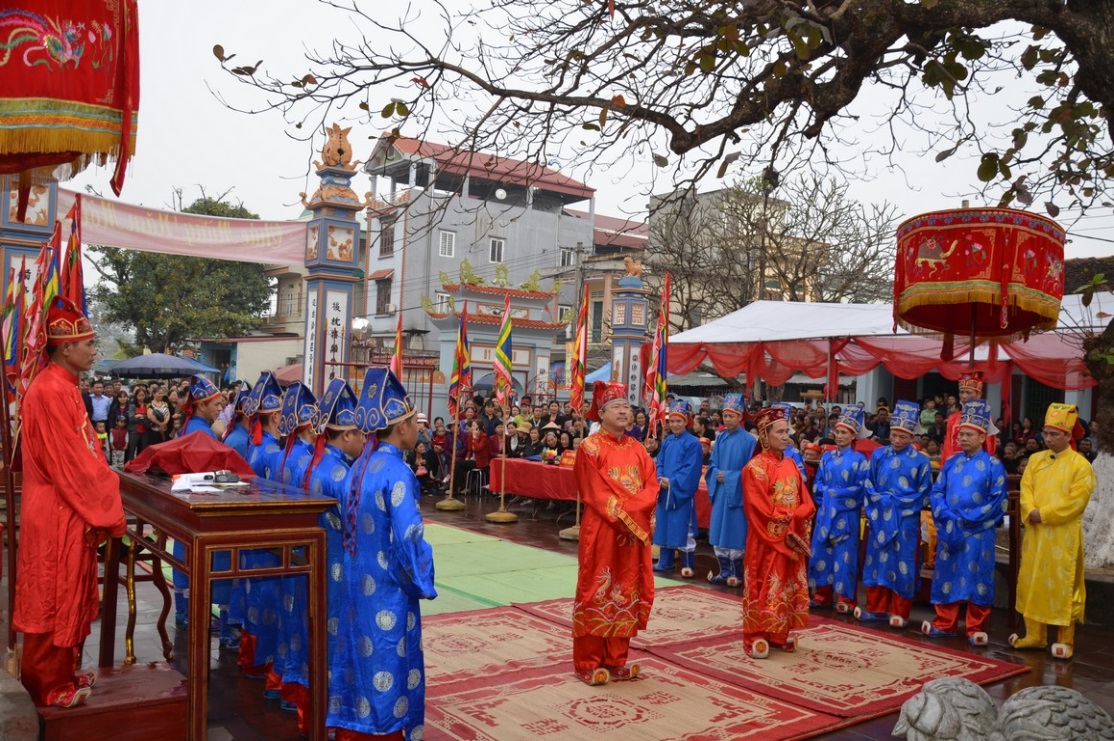 Village officials presenting themselves to the community and performing the sacred rites