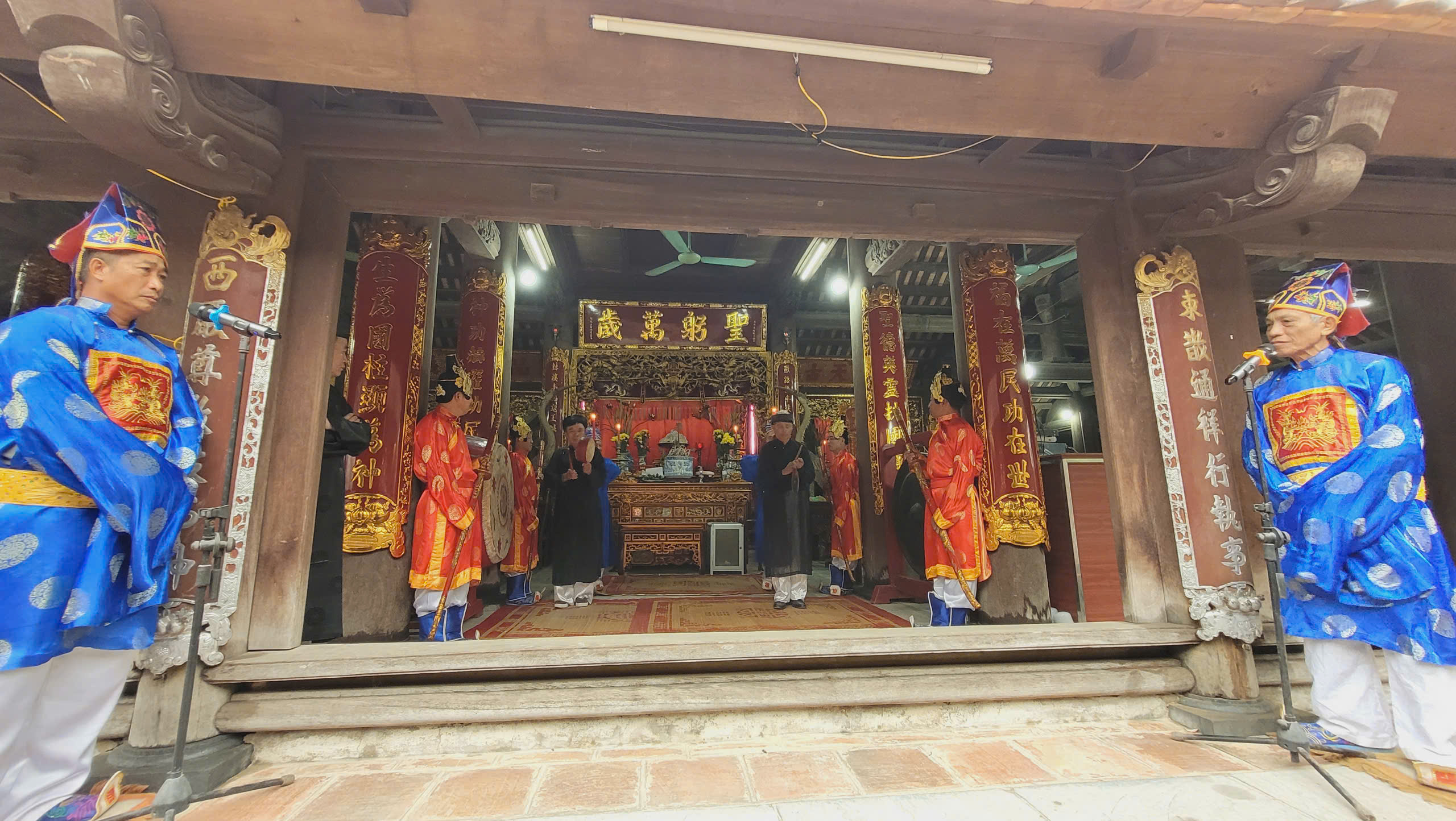
Mạch Tràng village (Cổ Loa Commune, Đông Anh District, Hà Nội) still preserves many unique cultural traditions. Among them, the “KHAO Ỉ” ritual stands out as a folk ceremony deeply rooted in Vietnamese agricultural beliefs. According to cultural researchers, the worship of the black pig (known locally as the lợn ỉ) reflects the spiritual life of wet-rice farmers. The ritual embodies the harmony of yin and yang, as well as age-old wishes for timely rain, abundant crops, fertility, and prosperity in daily life.
Every year, one giáp (clan group) takes on the duty of raising the sacred pig. The responsibility is assigned to the cai đám — the eldest member in the age rank of 54 according to the clan records. The pig is raised for two years and offered during the Chạp Ceremony (held on the 30th day of the 11th lunar month). To qualify, the pig must be a pure black lợn ỉ with no white hair. The caretaker receives 3 mẫu 2 sào of the best communal farmland to cultivate during this time. Additionally, over the four-year cycle, he is entitled to one leg of the sacrificial pig each year (the front legs in the first and fourth years, the hind legs in the second and third years). The sacred pig, known as “ông Ỉ,” is treated with great respect and allowed to roam freely throughout the village — no one may chase or harm it. As the cai đám also serves as the main ritual officiant, if he has any physical defect, another person, called hữu tì, will perform the role of officiant on his behalf, though the caretaker still retains all his privileges. At dawn on the 30th day of the 11th lunar month, villagers perform the Pig Offering Ceremony (lễ giết ỉ). The pig’s head is kept intact, boiled, and offered to King An Dương Vương, together with a tray of white sticky rice, rice wine, and flowers. The meat is then divided equally among the village’s four giáp: Đông, Đoài, Nam, and Bắc — which today correspond to the four production teams of Mạch Tràng village.
During the main Khao Ỉ Ceremony, 27 respected elders are selected to perform the ritual. Each participant must be free of recent mourning (tang bụi), have no physical defects, and maintain a complete family — with both spouse and children in good health.
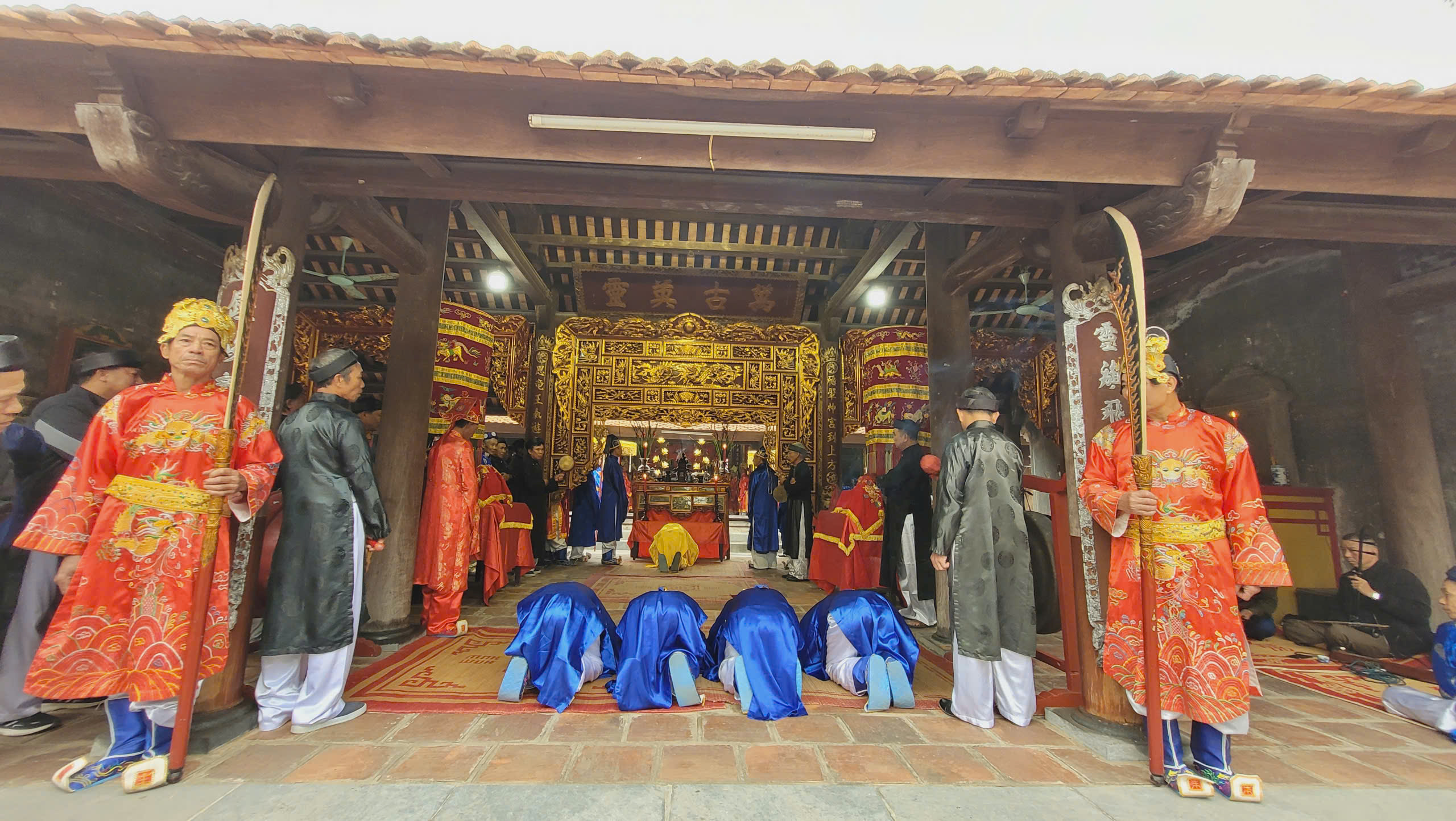
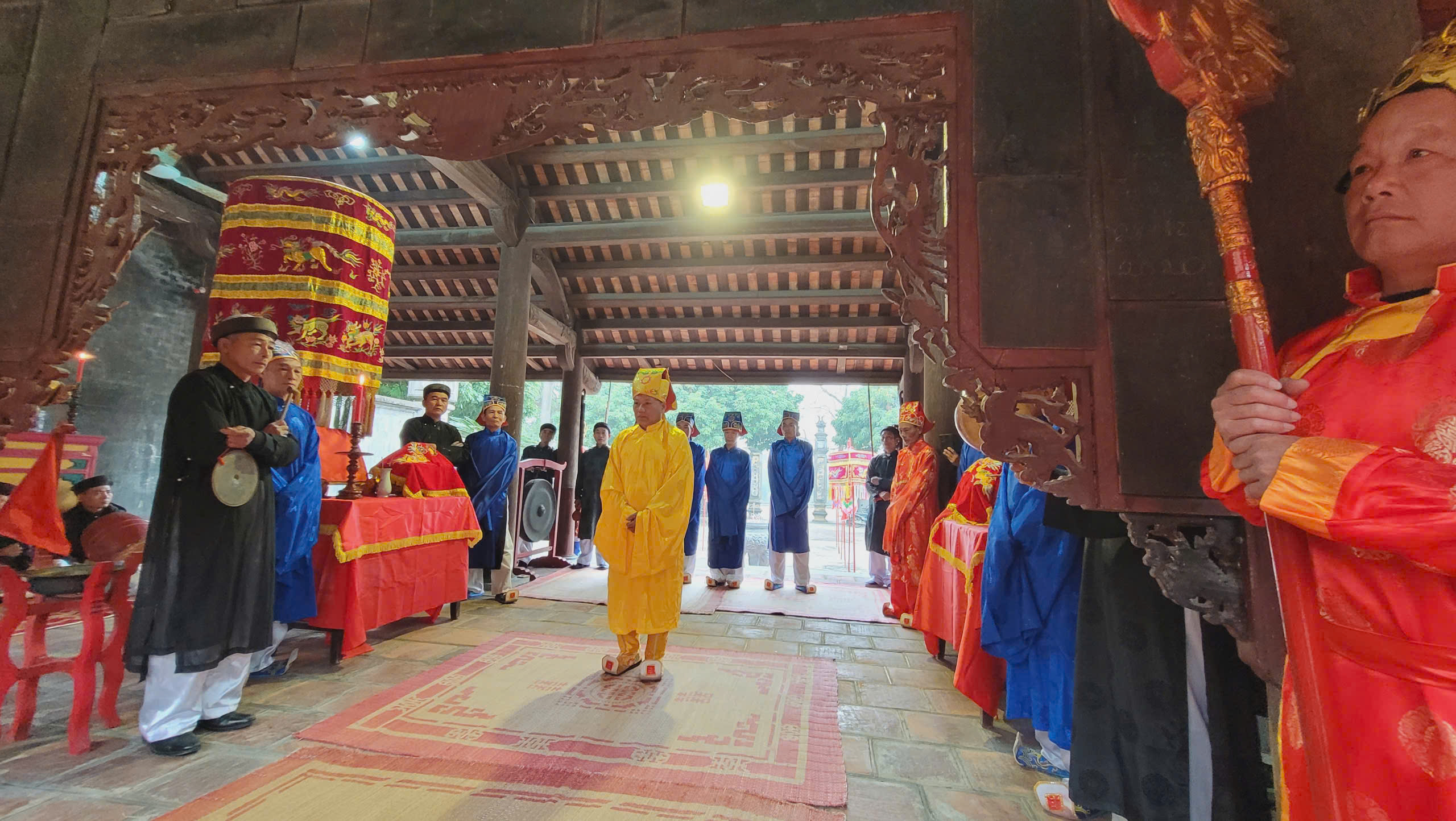 The ceremonial offerings on Khao Ỉ day
After completing the ceremonial rituals of the Chạp festival comes the Thụ lộc (Blessing Feast). What makes Mạch Tràng special is that the village has preserved its traditional way of thụ lộc from ancient times until today. Each mat seats four elders at its four corners, and the offerings consist of white sticky rice and boiled pork dipped in plain salt. The elderly, known collectively as Tòa lão, have strictly defined seating positions according to age: those aged 70 and above sit on the upper mat to the east, those aged 60–69 sit on the upper mat to the west, and those aged 50–59 sit on the lower mat.
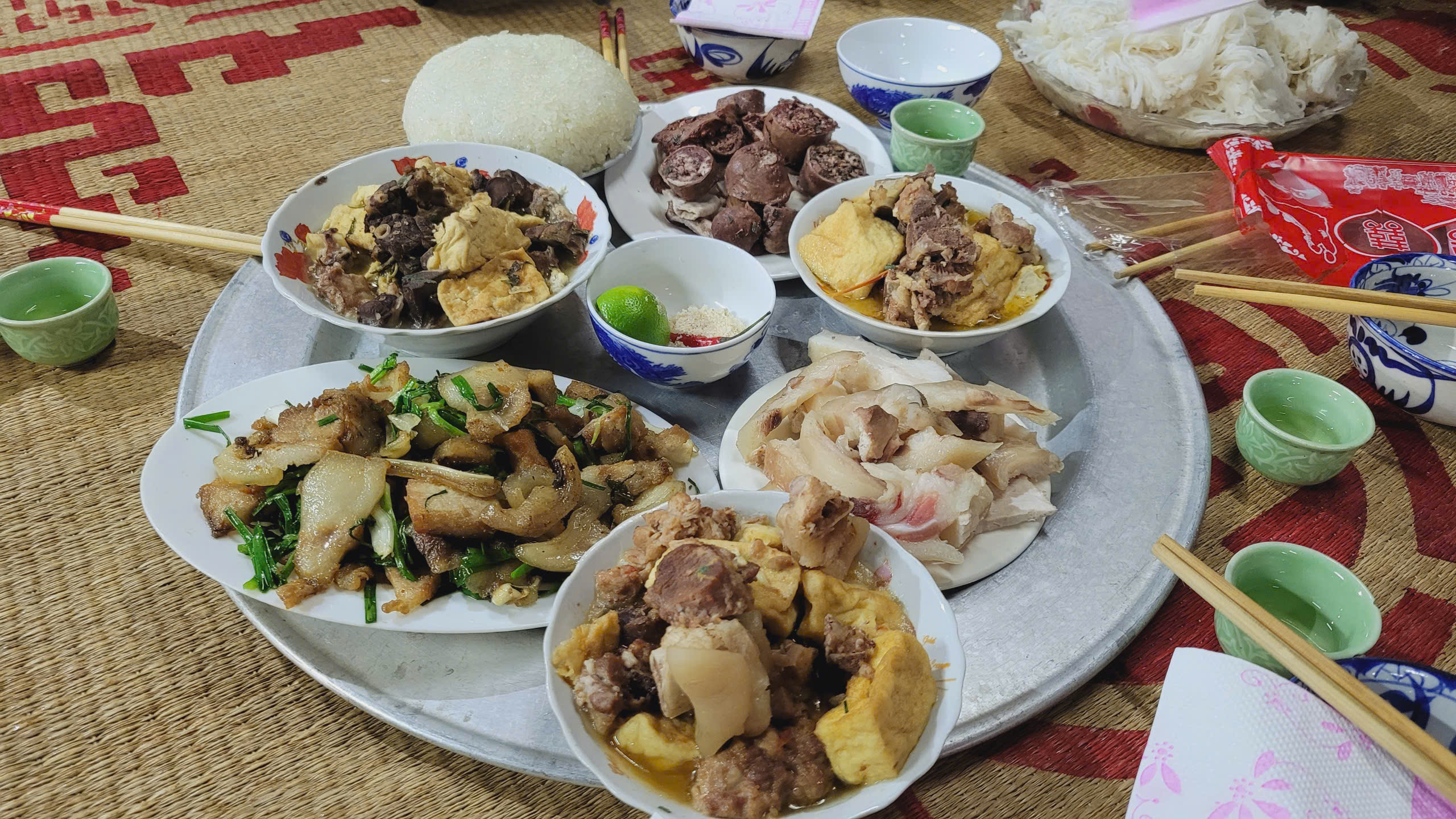 The Sacred Feast of Offerings (Thụ lộc)
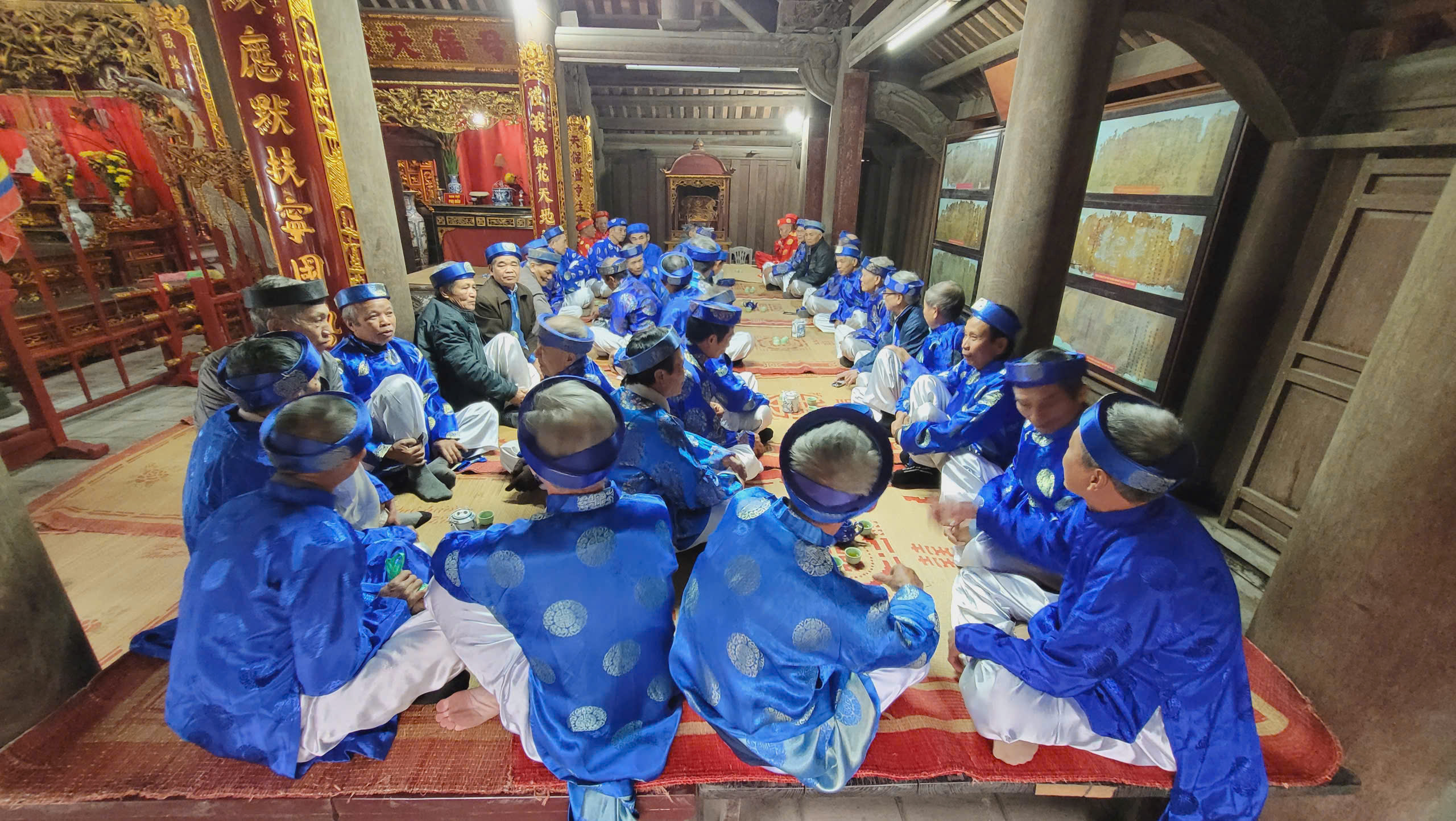
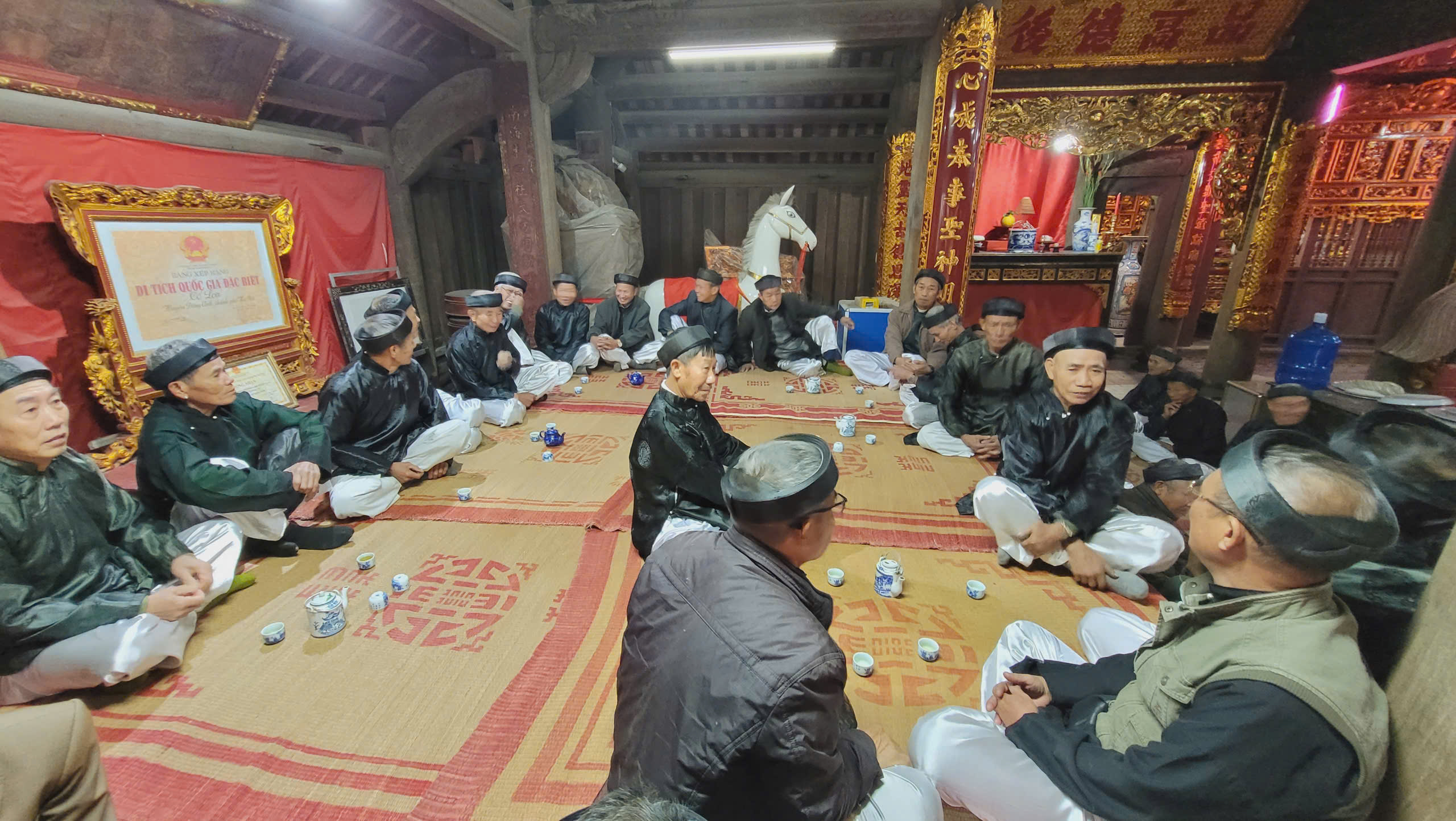
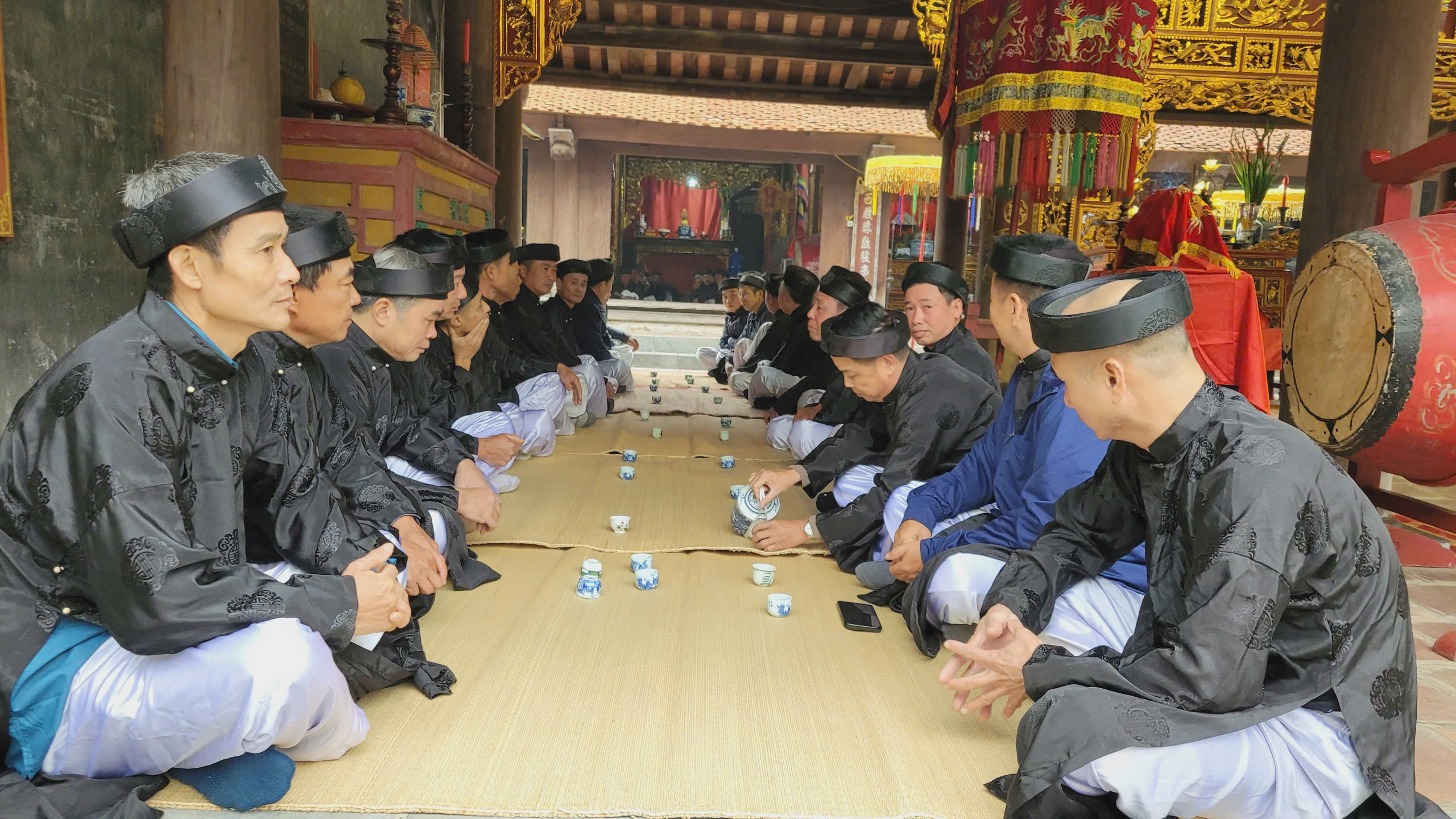 Seating order by age
The Khao Ỉ ritual in Mạch Tràng village is a unique cultural tradition that reflects the identity and heritage of the Vietnamese people.