On the morning of 28 January 2026 (the 10th day of the 12th lunar month in the Year of the Snake, Ất Tỵ), the Ridge-Beam Ceremony (Thuong Luong), marking the completion of the temple's roof framework, was solemnly held at the Temple of King Ngo Quyen in Co Loa Historic Site, following traditional rituals.
Held in a solemn and reverent atmosphere, the ceremony reflected the Vietnamese tradition of gratitude and remembrance towards previous generations. It also marked an important milestone in the construction of the Temple of King Ngo Quyen at Co Loa Historic Site.
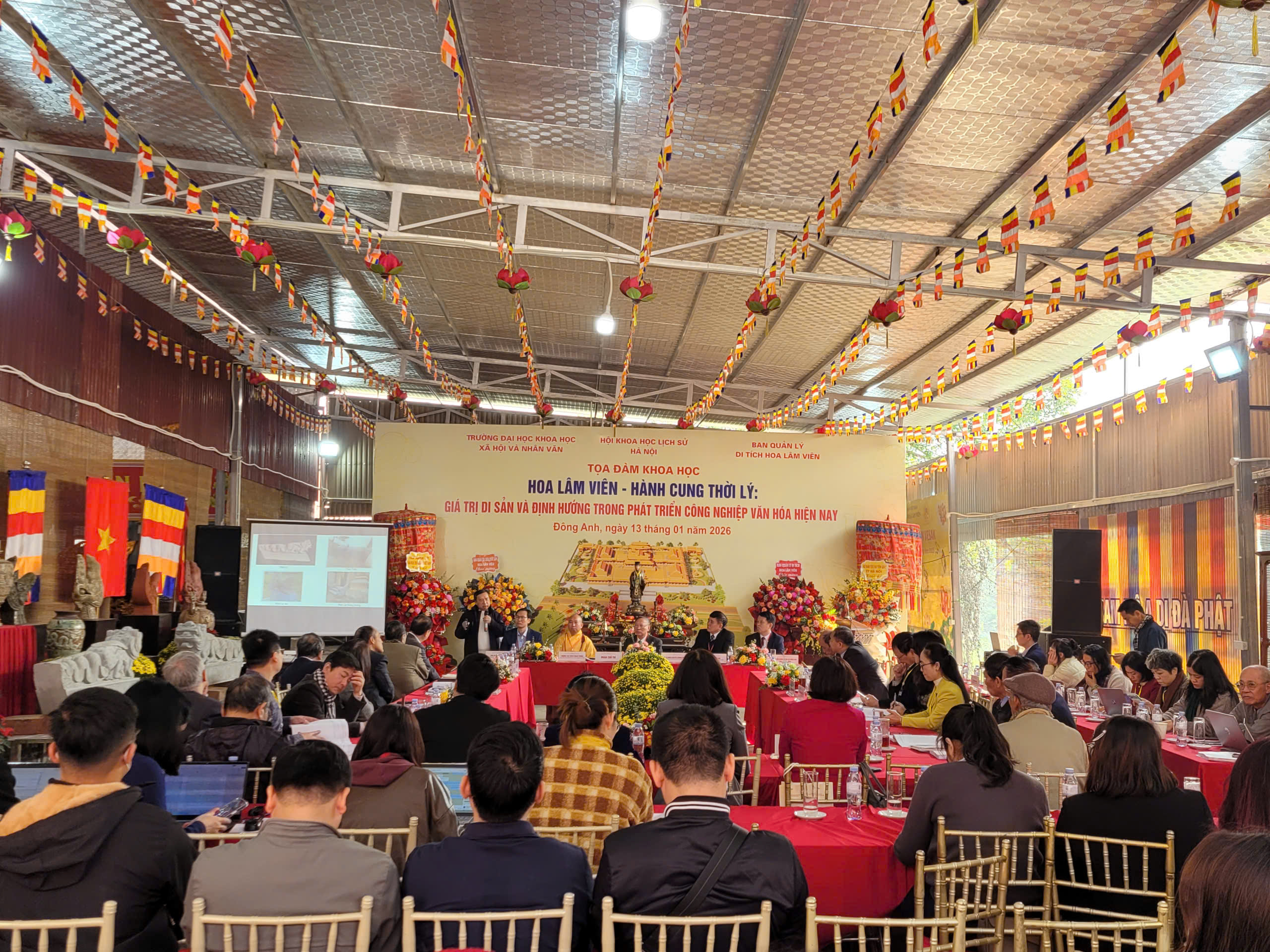
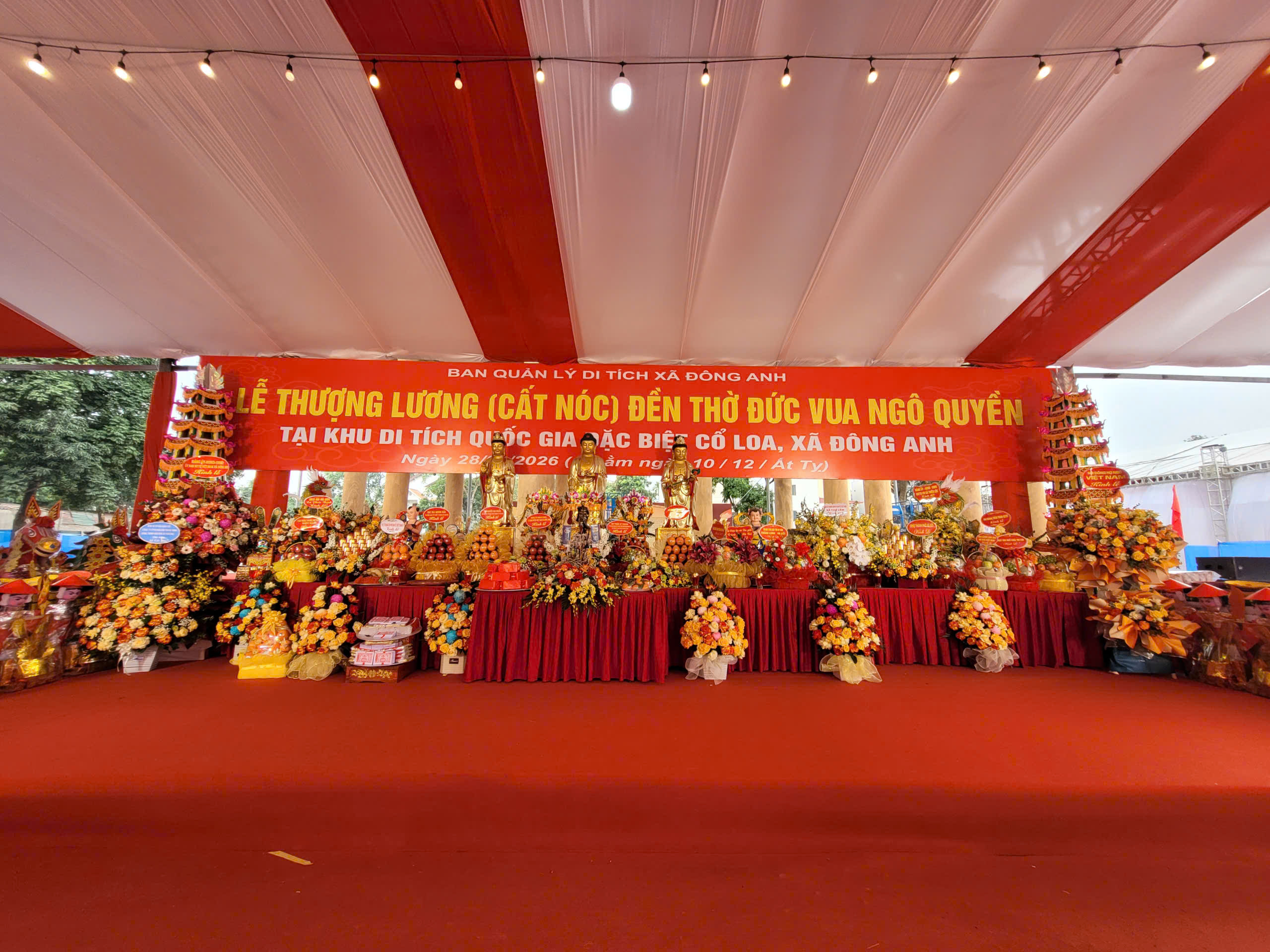 The ceremonial setting
King Ngo Quyen was a national hero who led the Vietnamese people to defeat the Southern Han forces on the Bach Dang River in 938, ushering in a lasting era of national independence and self-governance. The construction of the Temple of King Ngo Quyen at Co Loa Historic Site carries profound historical and cultural significance. It honours the contributions of this heroic king while enriching the site's network of monuments associated with dynasties and prominent historical figures in Vietnam's long history of nation-building and national defence.
The Ridge-Beam Ceremony (Thuong Luong) is an important ritual in the construction of traditional architectural buildings. It expresses wishes for the building's durability and longevity, while also invoking peace and prosperity for the nation and its people, favourable progress in construction, and the timely completion of the project so that it may serve the community's cultural and spiritual life.
The ridge beam being installed at the Temple of King Ngo Quyen
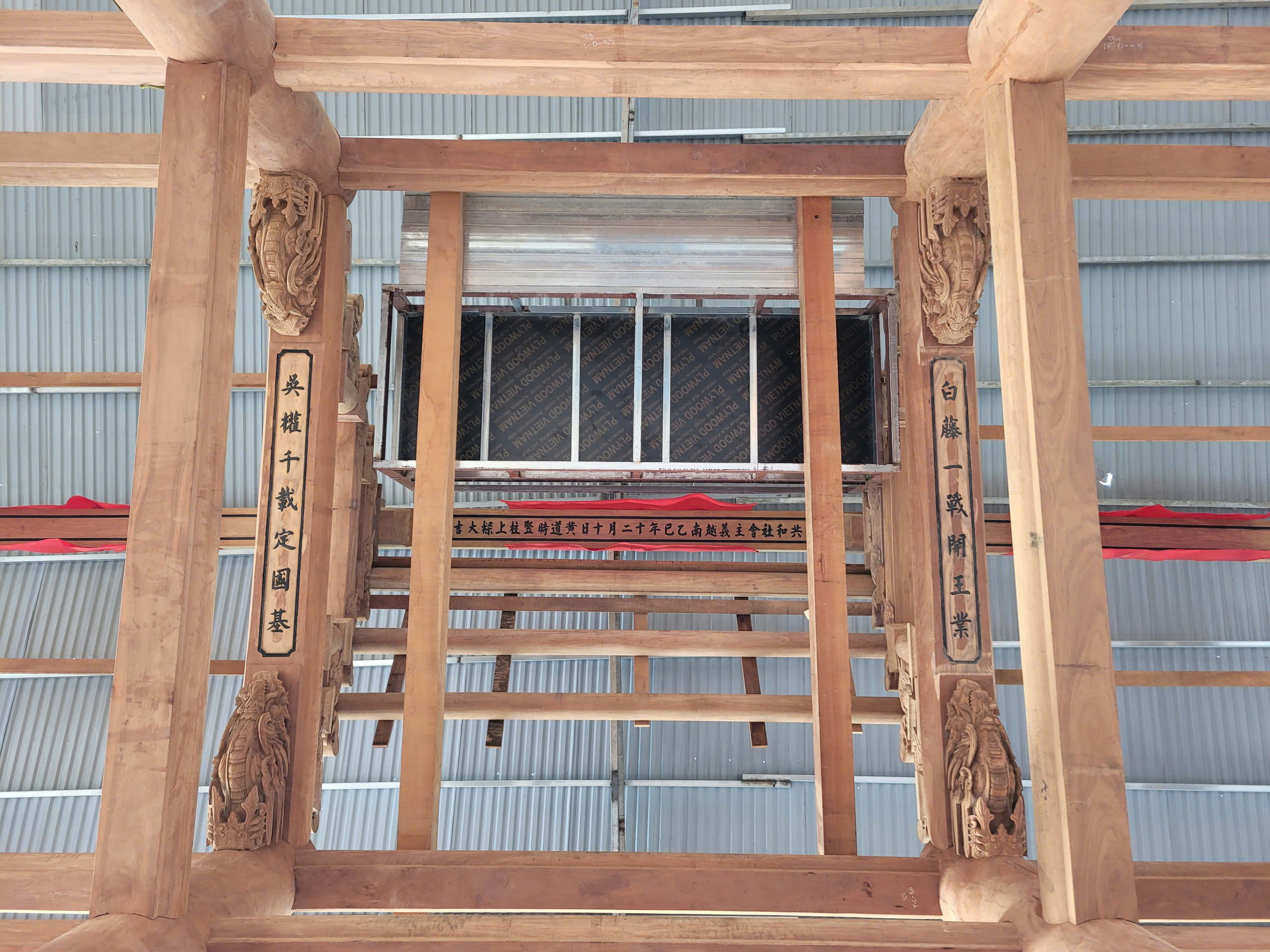
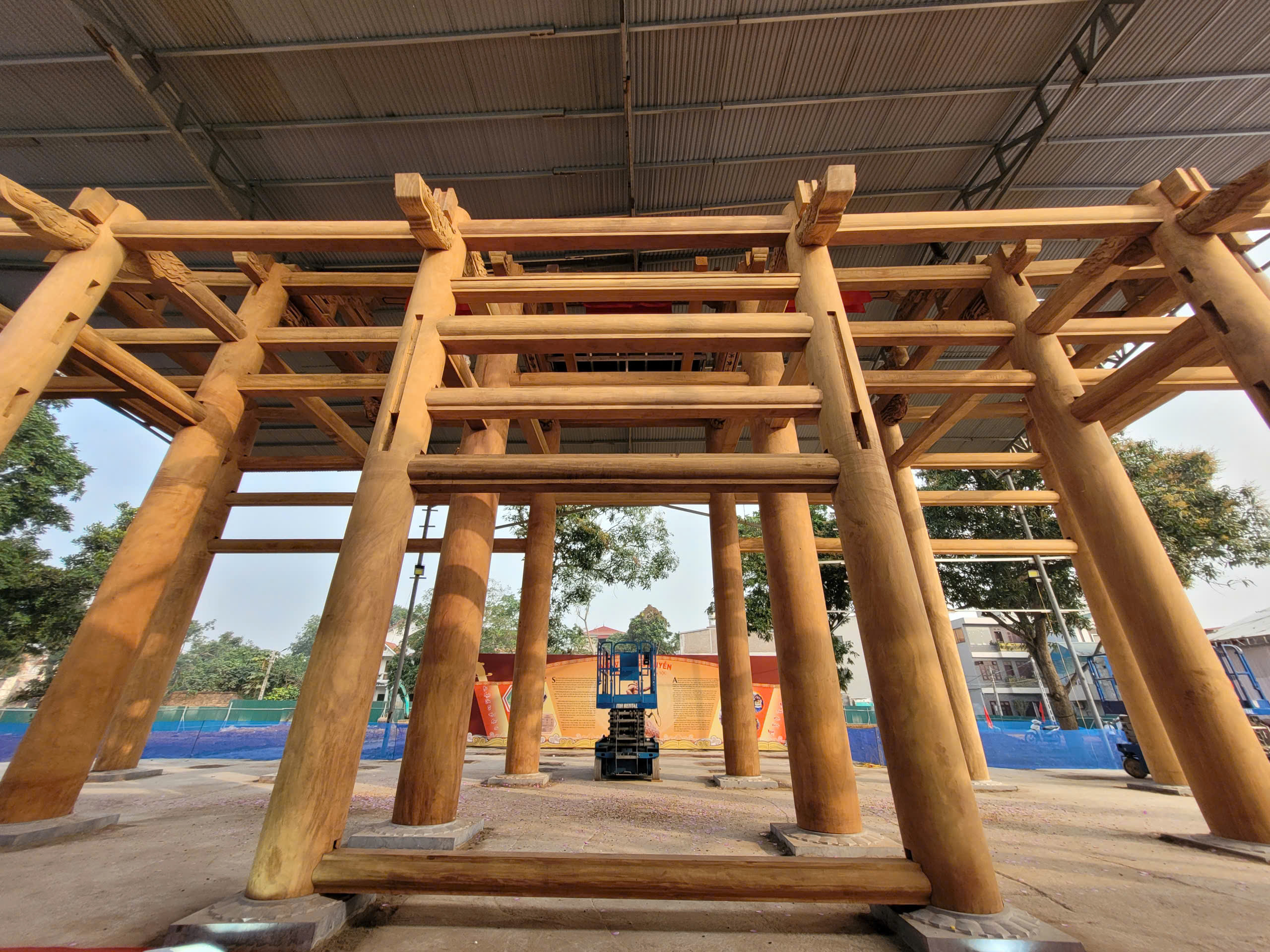 The wooden structural framework of the Temple of King Ngo Quyen
The organisation of the Ridge-Beam Ceremony at the Temple of King Ngo Quyen carries not only spiritual significance but also reflects the attention and commitment of authorities and relevant organisations to the conservation, restoration and promotion of cultural heritage values at Co Loa Historic Site. Upon completion, the temple will become an important historical and cultural landmark, contributing to the education of patriotism and national pride among present and future generations.
CO LOA HISTORIC SITE MANAGEMENT BOARD