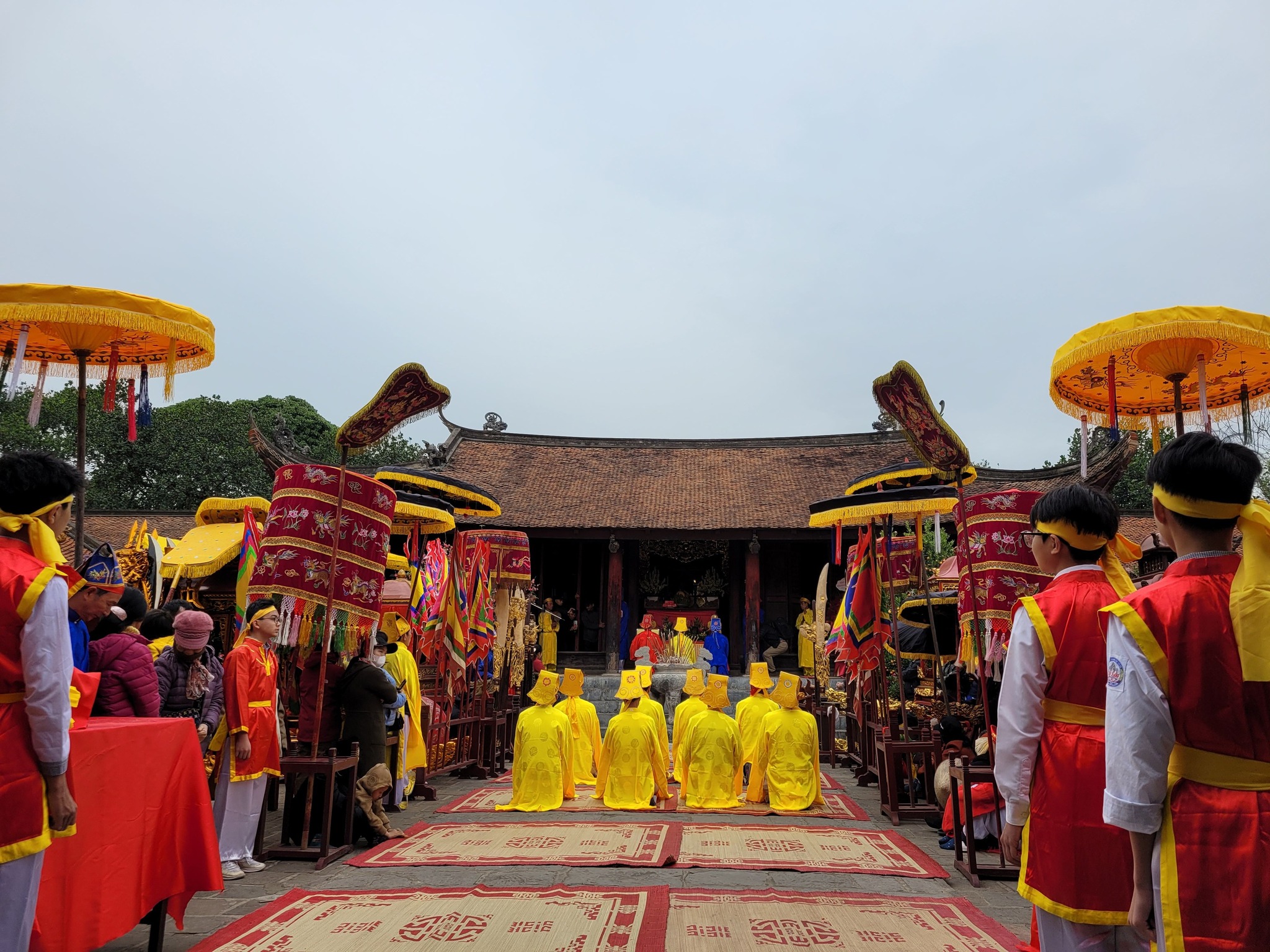
On the morning of February 3, 2025 (the 6th day of the Lunar New Year, Year of the Snake Ất Tỵ), the Cổ Loa Festival was held with various unique activities, in which traditional rituals and ceremonial practices are indispensable.
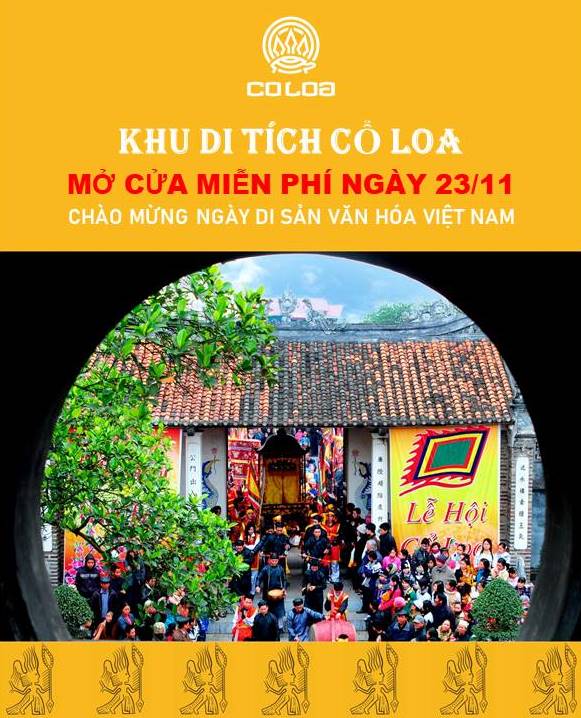
Early in the morning, the villages brought their palanquins to Cổ Loa from two directions. The western side (to the right of the Upper Temple) gathered at the Outer Citadel, including the villages of Mạch Tràng, Sằn Giã, Đài Bi, and Cầu Cả. The eastern side (to the left of the Upper Temple) gathered at Sa Market, comprising the villages of Văn Thượng, Ngoại Sát, and Thư Cưu. At 7 a.m., following the ceremonial drum signal, the two processions advanced toward the Upper Temple. Upon reaching the western end of the lake, the two merged into one, arranged in order: Văn Thượng – Mạch Tràng – Sằn Giã – Ngoại Sát – Đài Bi – Cầu Cả – Thư Cưu. The procession then entered the Upper Dragon Courtyard, lowering the palanquins in the following order: Eastern side: Văn Thượng, Sằn Giã, Đài Bi, Thư Cưu; Western side: Cổ Loa, Mạch Tràng, Ngoại Sát, Cầu Cả.
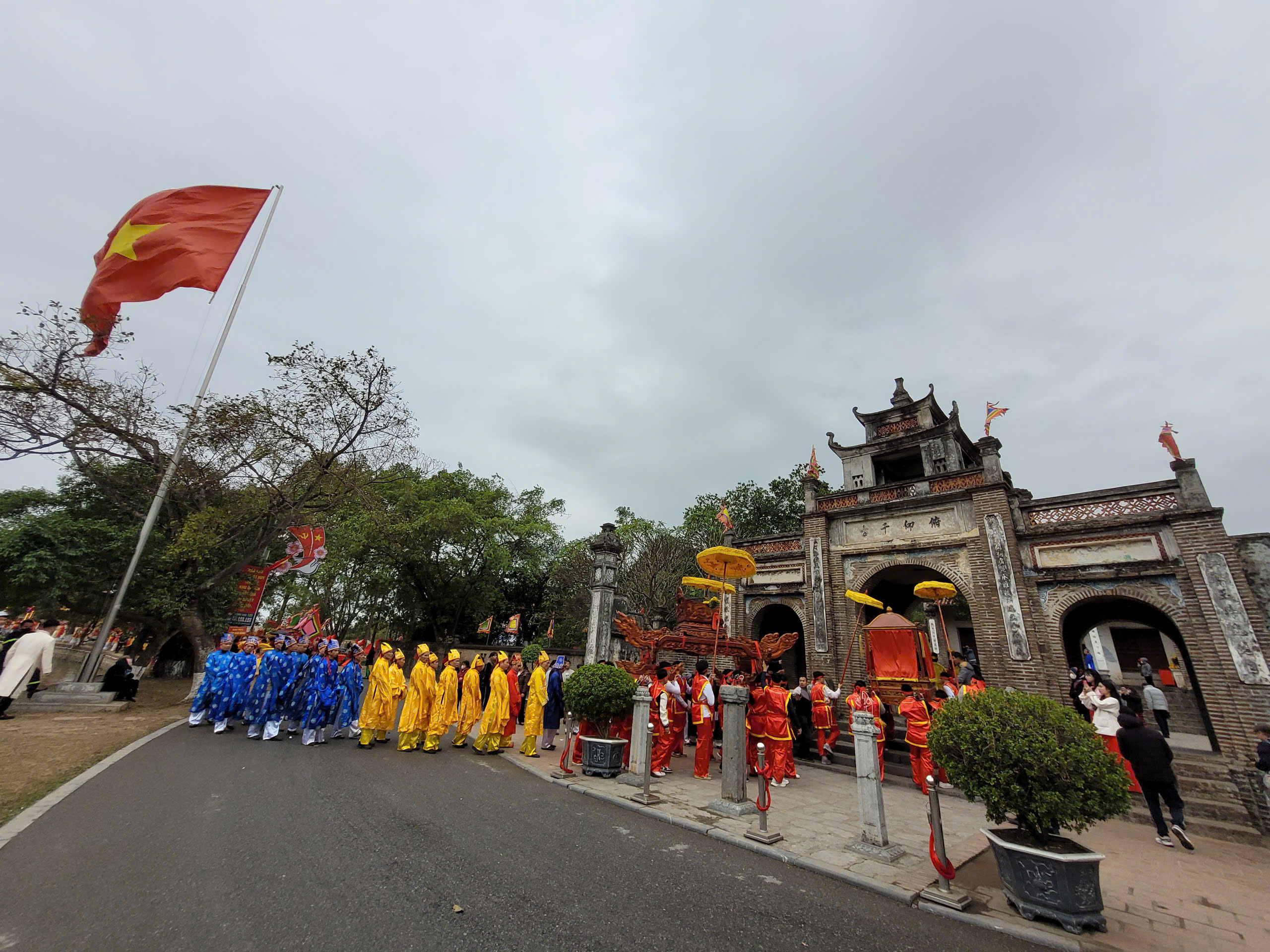
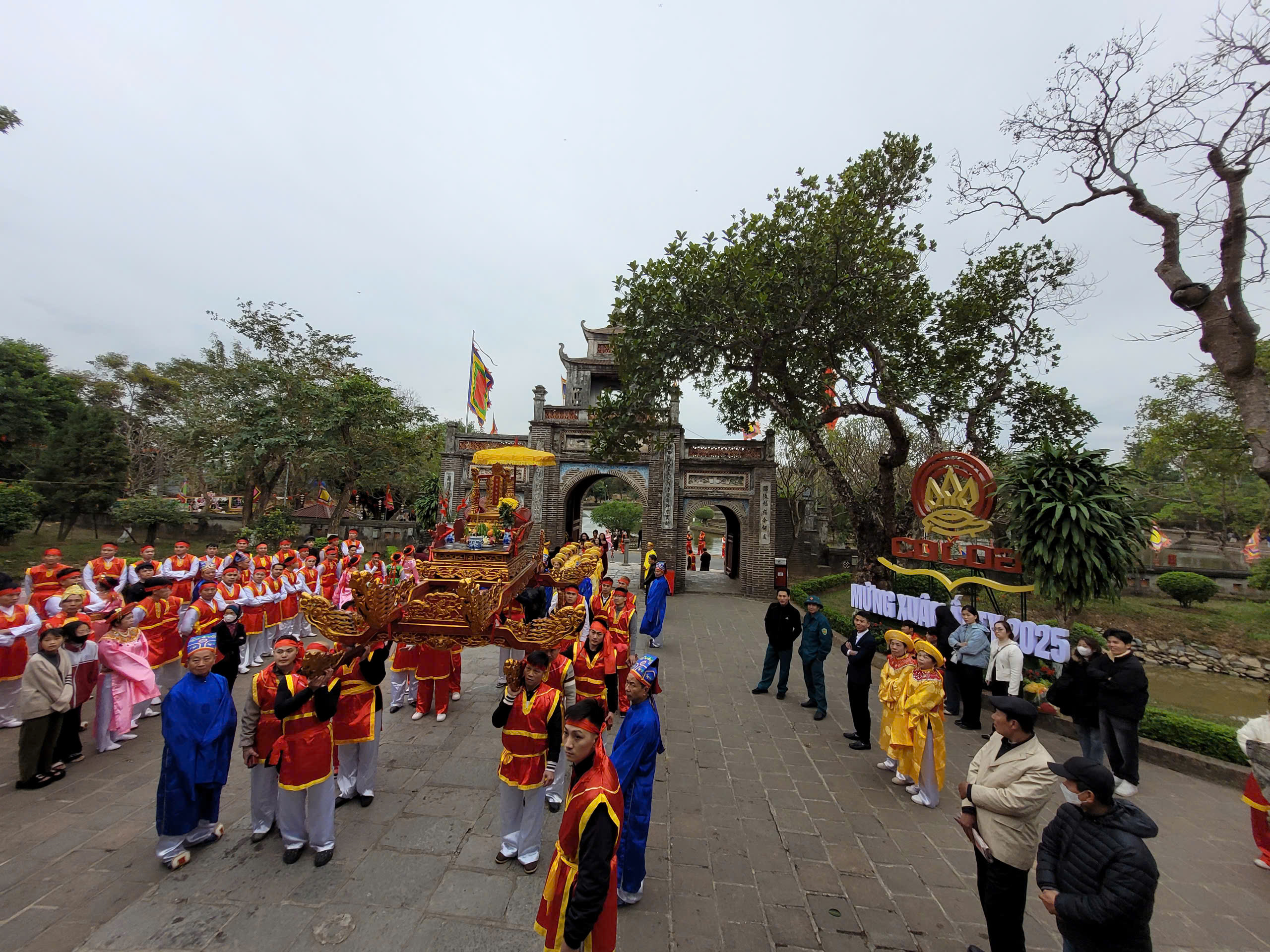 Villages bringing palanquins to offer rites at the Upper Temple
According to legend, when King An Dương Vương chose Cổ Loa as the site for the capital, the people of Quậy Village gave their land to the king to build the citadel. Therefore, although Quậy Village is not listed among the Eight Villages (Bát Xã), as original inhabitants of Cổ Loa, they are invited to the festival and granted the honor of performing the Secret Petition (Mật khẩn) at the upper mat in front of the temple, with other villages required to greet them. The Elder of Quậy delivers congratulations, performs the ritual, and reads the Secret Petition at the upper mat before the temple entrance.

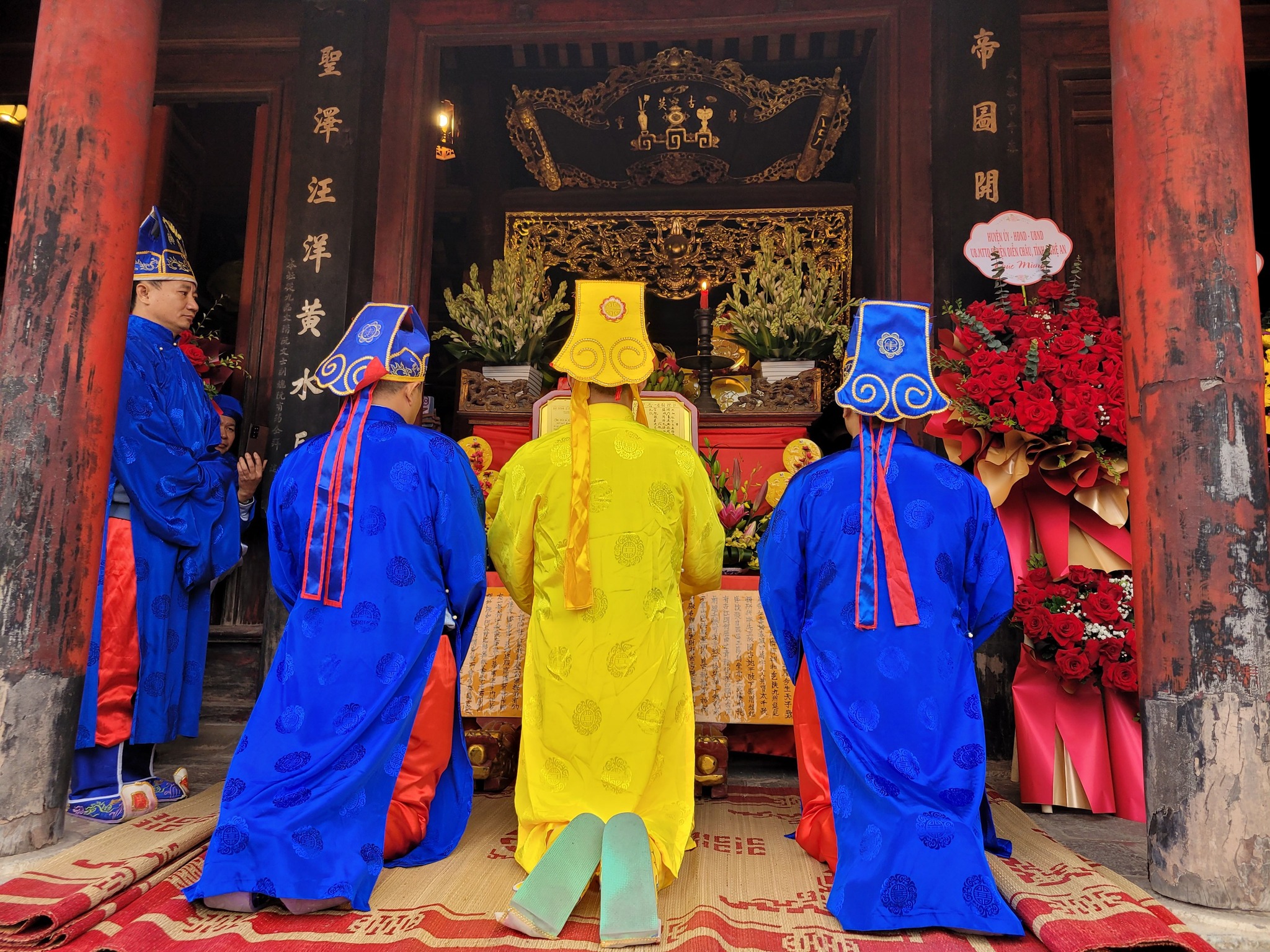 The Elder of Quậy performing the ritual and reading the Secret Petition
Following this is the Council Offering Ceremony at Cổ Loa, lasting more than two hours with 67 ceremonial chants. This is the most important ritual of the festival, performed by village elders to welcome and invite the deity to receive offerings. It is also an occasion for the villagers to praise the deity, express gratitude, and pray for peace, happiness, and prosperity for the community and the nation.
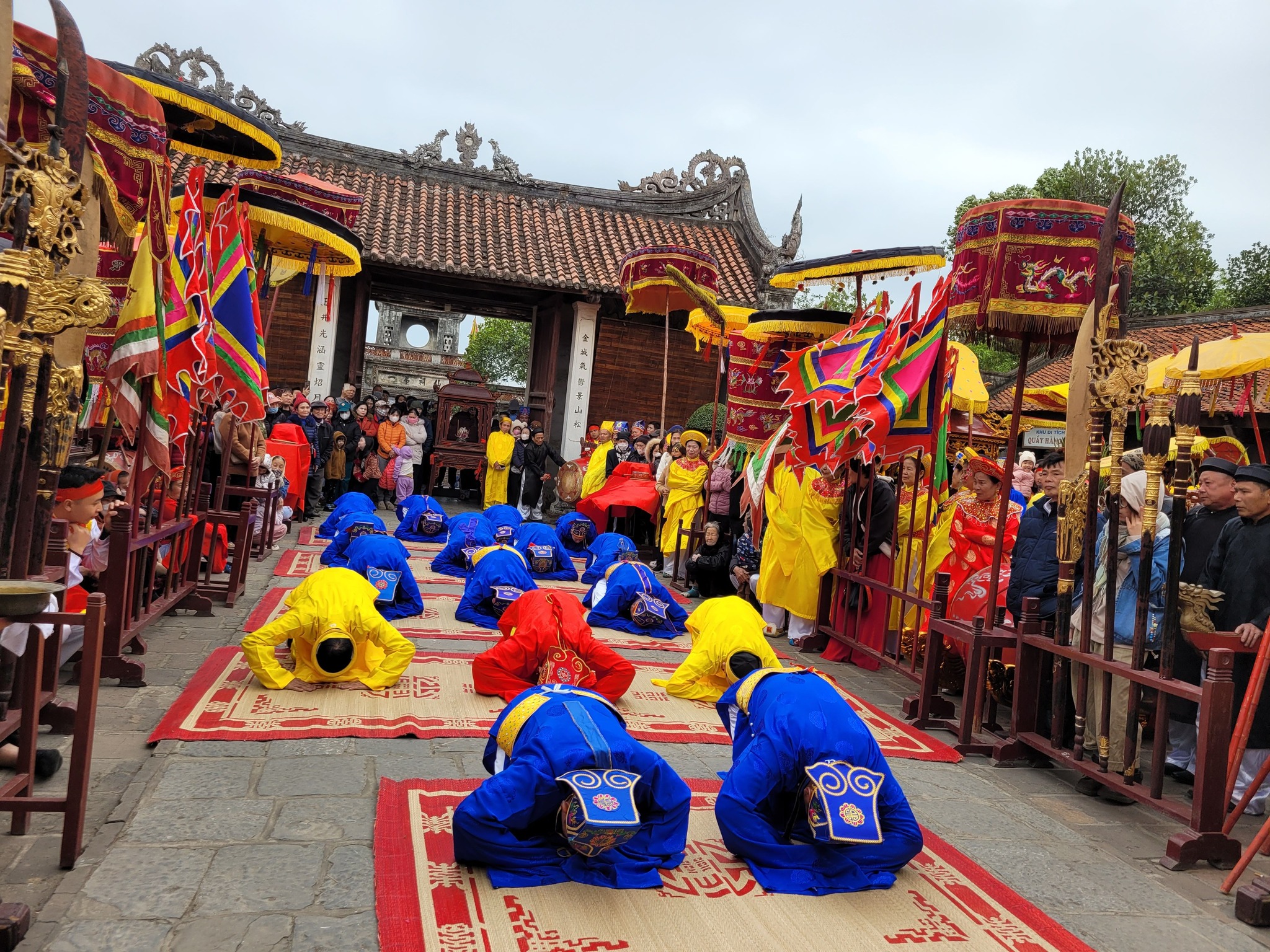
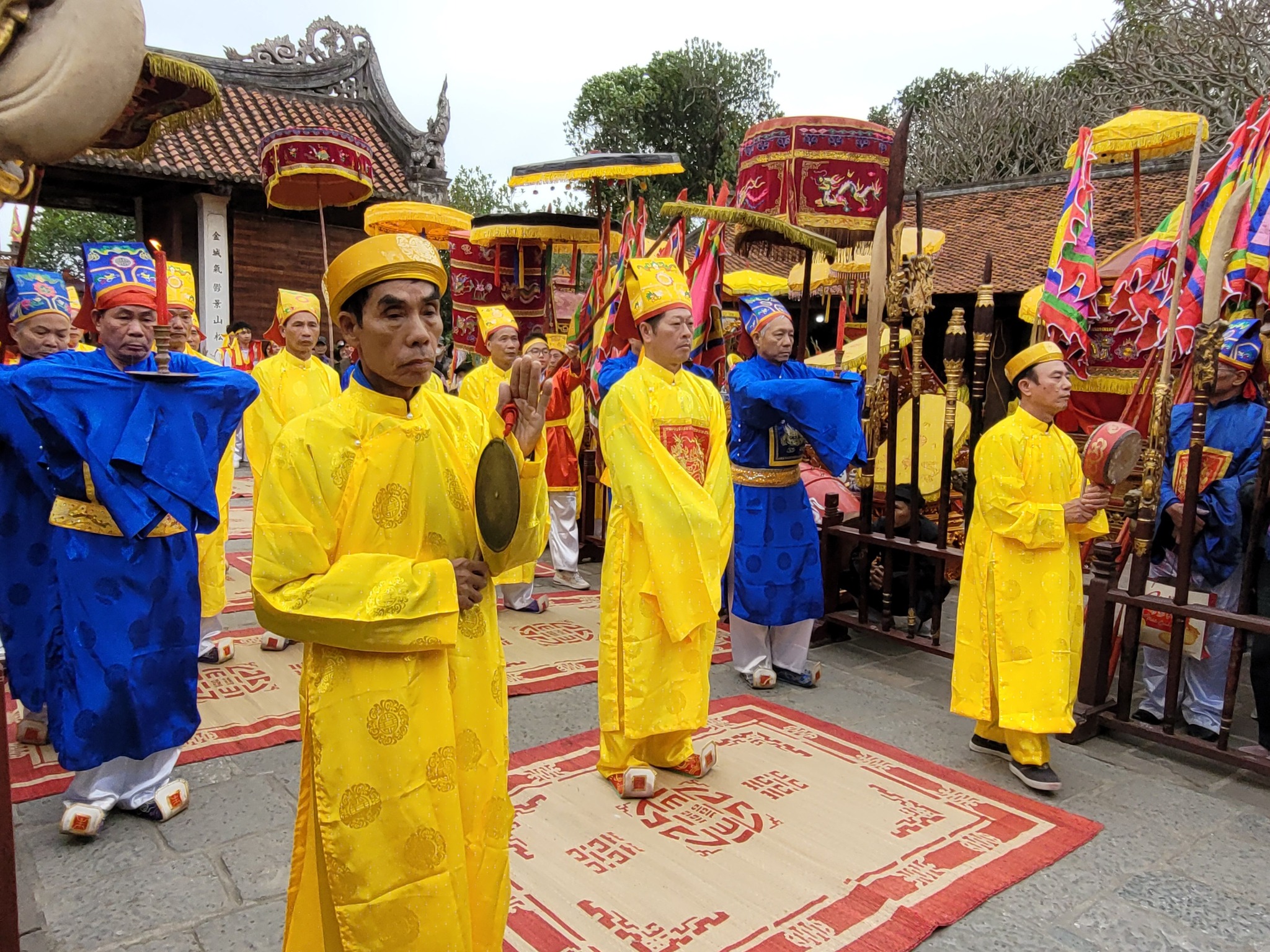 Council Offering Ceremony
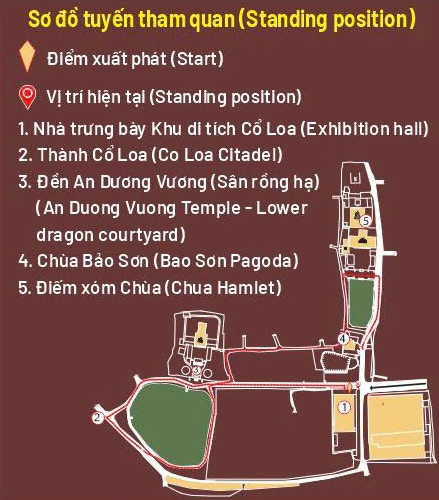
After the Council Offering Ceremony is the Palanquin Procession of the Eight Villages. Departing from the Upper Temple, the Cổ Loa village palanquin leads the procession, followed by the villages of Văn Thượng, Mạch Tràng, Sằn Giã, Ngoại Sát, Đài Bi, Cầu Cả, and Thư Cưu. The procession moves from the Upper Dragon Courtyard down to the Lower Dragon Courtyard, exits the temple gate, turns right toward the west, circles southward around the Jade Well (Ngọc Tỉnh), then proceeds eastward. At the crossroads, the Cổ Loa delegation turns directly into the Ngự Triều Di Quy communal house and remains there. In the afternoon, Cổ Loa conducts rituals at the communal house, then returns the palanquin to the temple. The remaining villages return their palanquins to their respective communal houses and continue their village festivals from the 8th to the 16th day of the first lunar month.
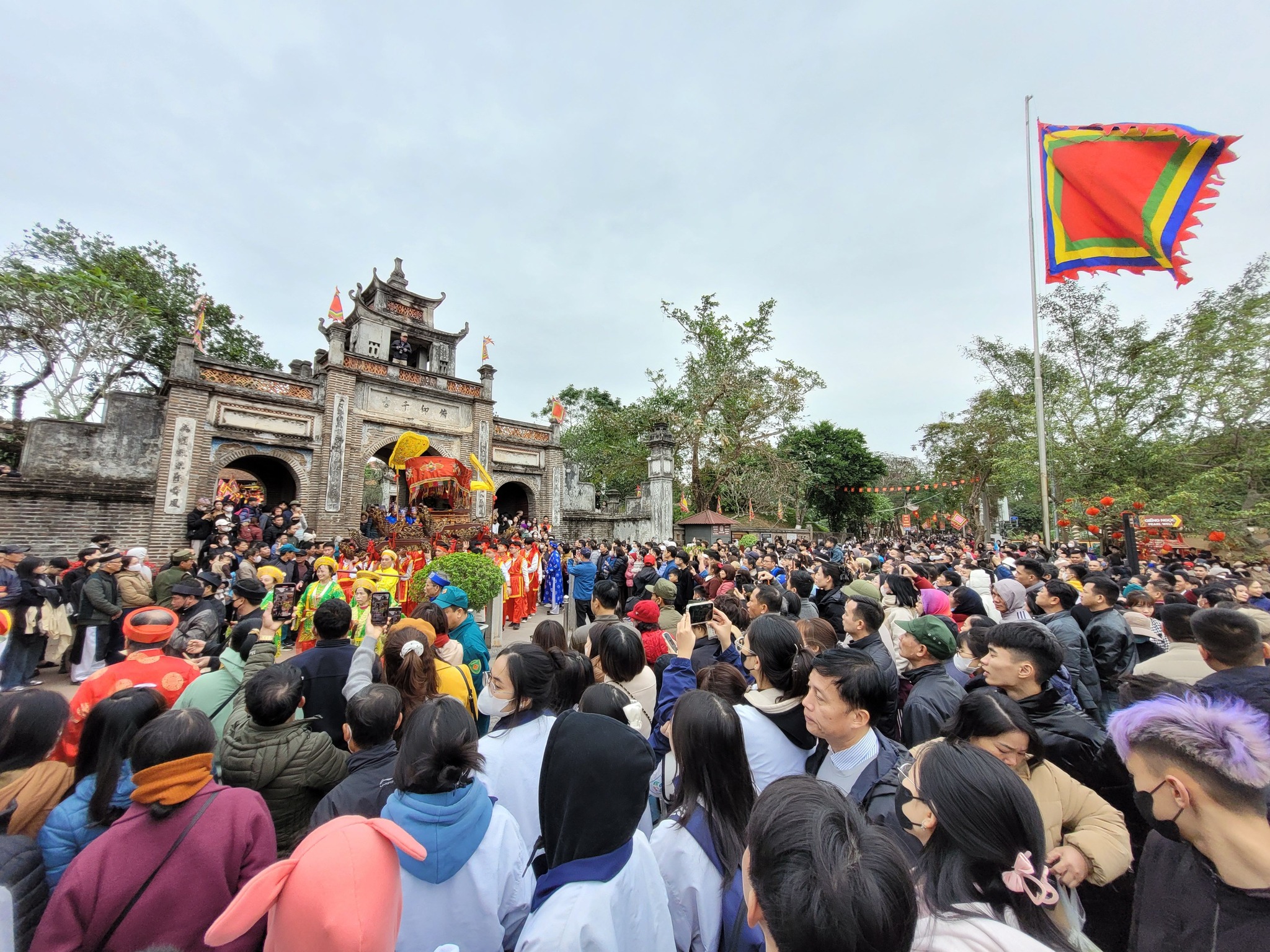
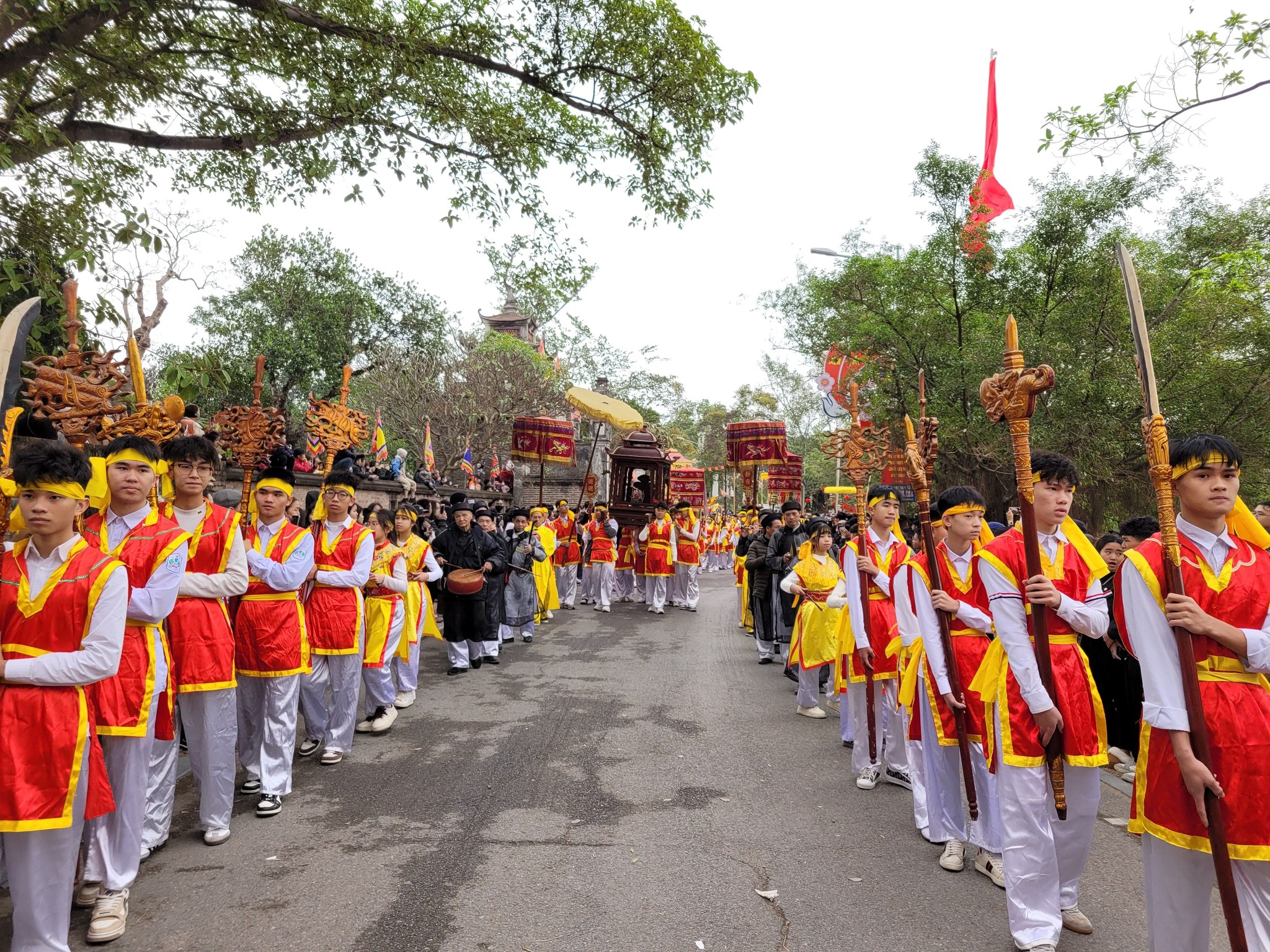 Palanquin Procession of the Eight Villages
On the afternoon of the 6th day of the first lunar month, Cổ Loa village officials conducted rituals at the courtyard of Ngự Triều Di Quy Communal House.
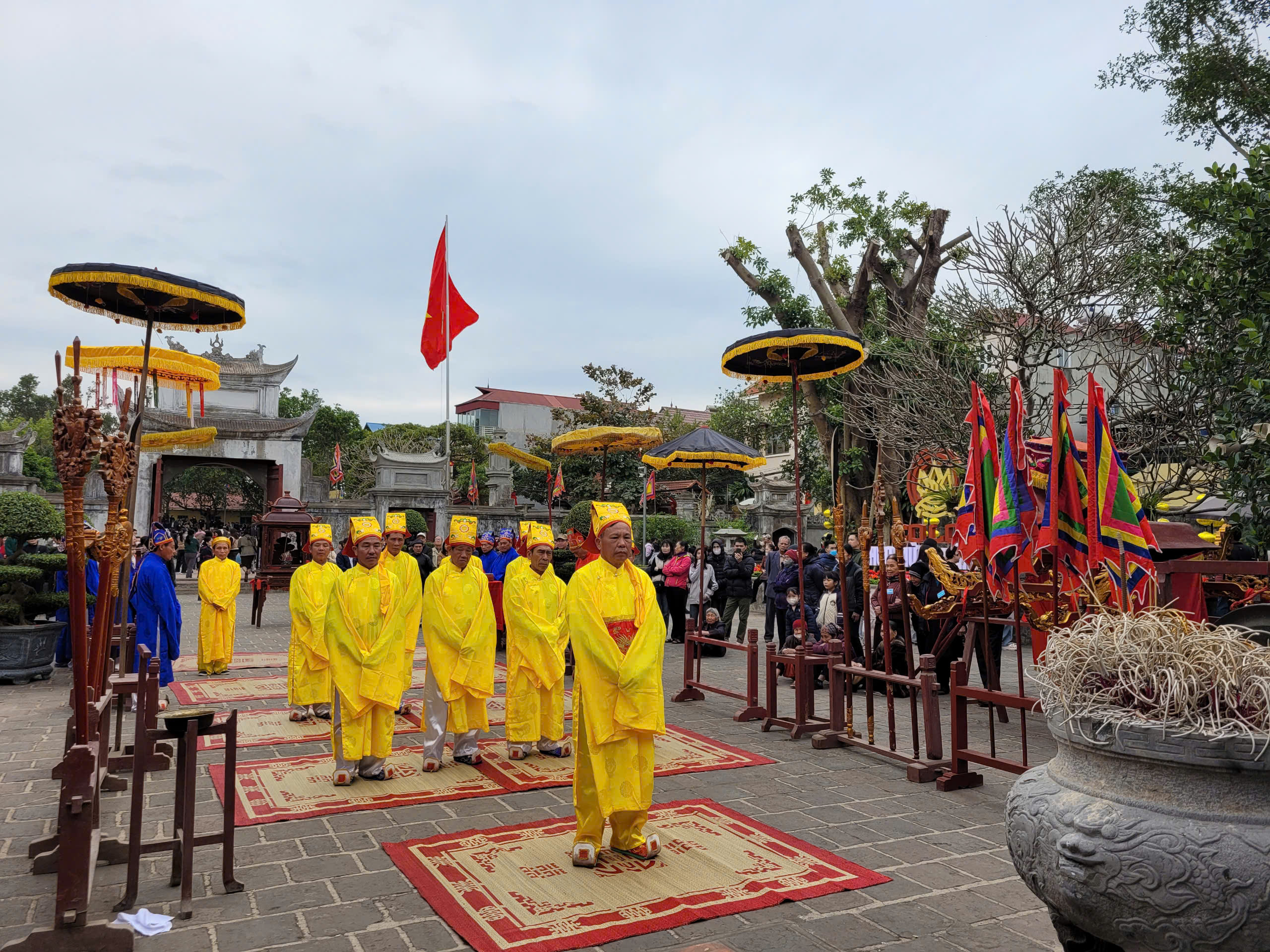
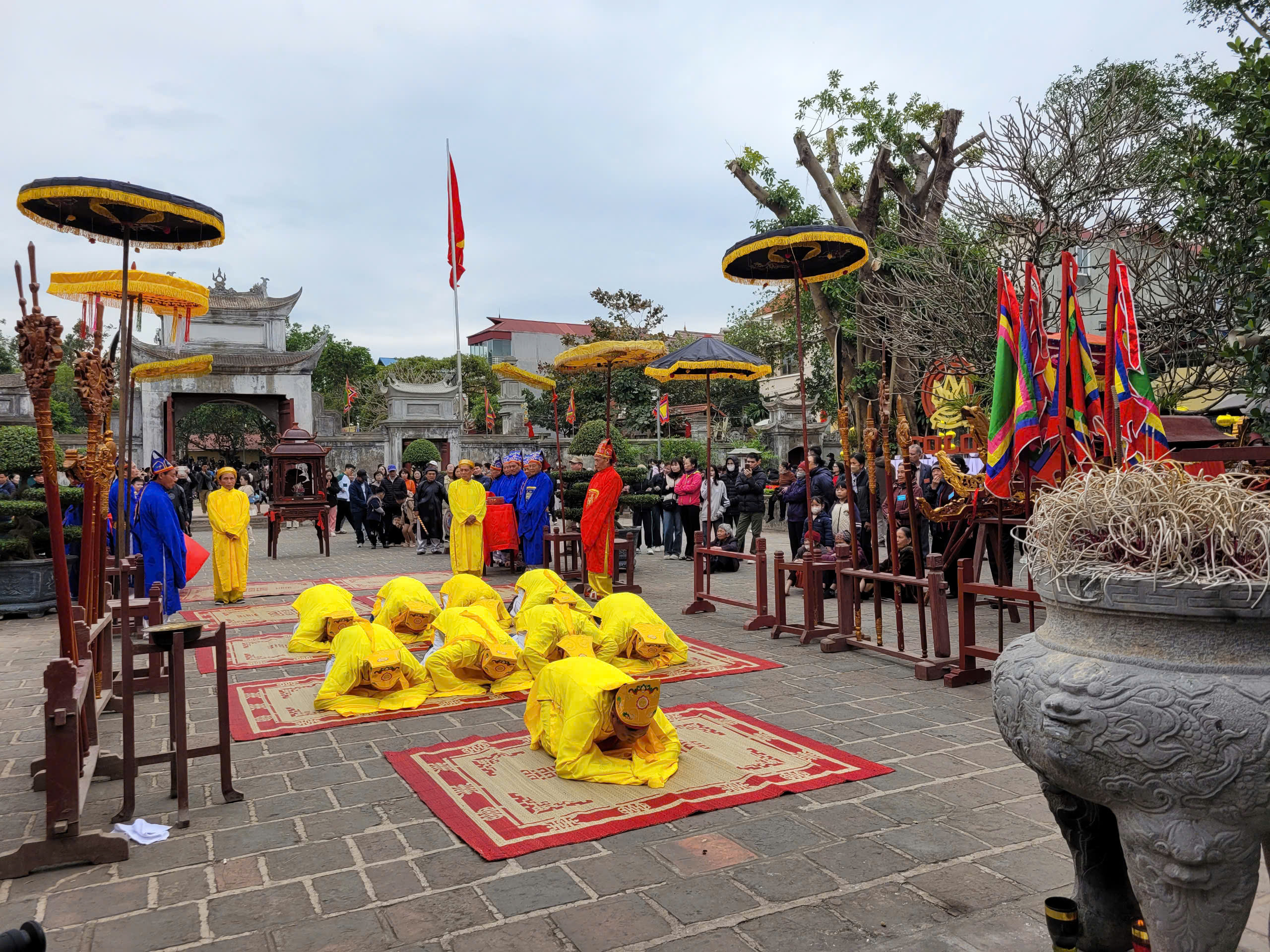 Village officials performing the rituals
Through these traditional rituals, the Cổ Loa Festival is not only an occasion for the people of Cổ Loa to honor the contributions of King An Dương Vương, but also a cultural event rich in humanistic values—reminding future generations of national history, loyalty, sacrifice for the homeland, and celebrating Vietnam’s tangible and intangible cultural heritage.